Tacoma rain finds the weak spot in a chimney. Cracked crowns, failed flashing and loose mortar let water in. Soot, creosote and blocked flues add fire and carbon monoxide risk. The fix starts with a written inspection, then a repair matched to what the inspection finds. This guide covers the signs to watch for, the repairs that follow, and how to hire the right pro in Tacoma.
TL;DR
- Crumbling brick, water stains, smoke in the room and odd odors mean stop using the fireplace and book an inspection.
- Get findings in writing. Ask for a video scan when the flue cannot be seen by eye.
- Have chimneys and gas fireplaces checked every year, and again after a fire, storm damage, an appliance change or a home purchase.
- Verify any contractor with Washington Labor & Industries before work starts.
- Fix water entry before the wet season. Small gaps become rebuilds.
Table of Contents
- Signs a Tacoma chimney needs repair
- What to do right now if something seems wrong
- Why rain is the main enemy in Tacoma
- Common chimney repairs and what they involve
- Sweep, inspection or repair: which one do you need?
- Wood burning rules in the Tacoma area
- Buying a home in Tacoma? Check the chimney first
- How to hire a chimney repair contractor in Tacoma
- Where to start: timing matters
- Our perspective
- Book an inspection or repair with Prime Chimney
- FAQ
- Sources
Signs a Tacoma chimney needs repair
Do not wait. Look for these:
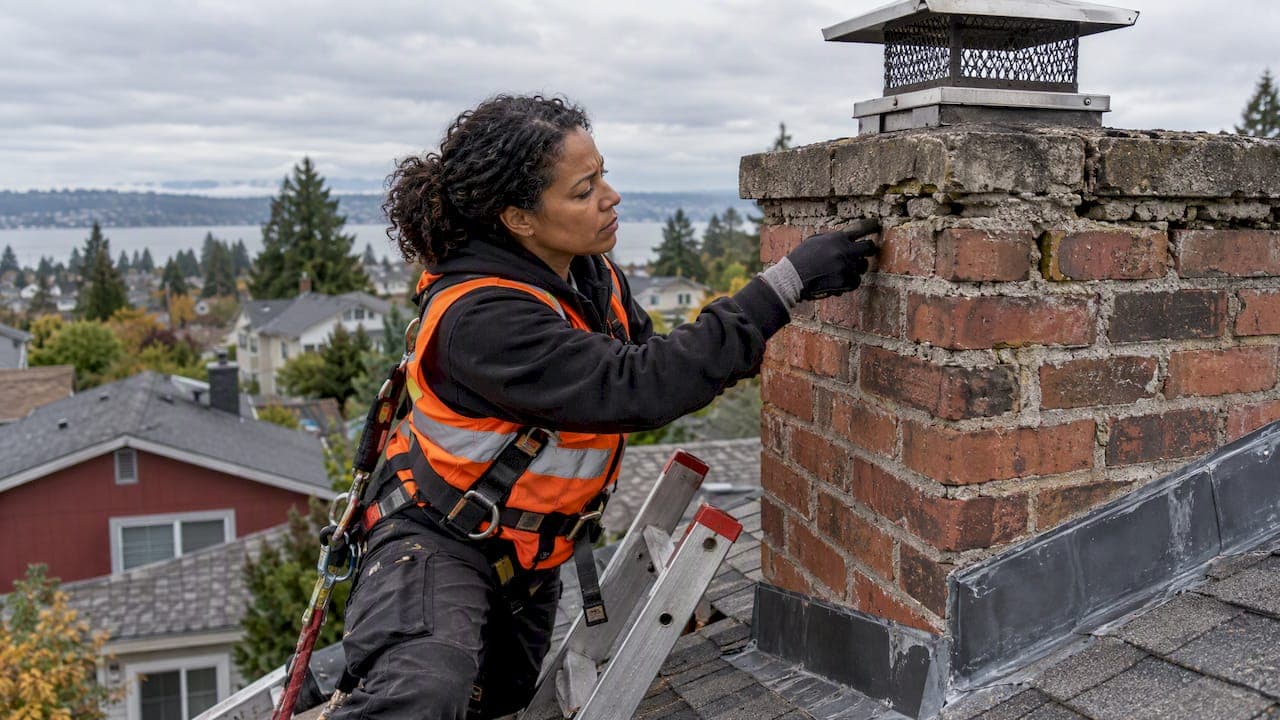
- Crumbling or falling masonry. Bricks that flake, mortar that washes out, pieces on the roof or ground.
- Water stains. Brown marks on the ceiling near the chimney, on the wall, or inside the firebox.
- Smoke entering the room. The fire should draw up and out. If it does not, something is blocked or damaged.
- Unusual odors. A damp, smoky smell, especially in wet weather, points to deposits and moisture.
- Fire or storm damage. A chimney fire, a fallen limb or a hard wind event all call for an inspection, even if nothing looks wrong.
The Chimney Safety Institute of America homeowner guide lists these warning signs. It also names a home purchase, a change of appliance or fuel, and any chimney fire as reasons to have the system inspected.
The city takes this seriously too. Tacoma's nuisance fact sheet lists a chimney falling apart among potentially unsafe housing conditions. A failing chimney is a safety problem first and a code problem second.
What to do right now if something seems wrong
Stop using the fireplace, stove or insert. Do not light it again until a qualified pro has found it safe.
If you smell gas, or anyone has headaches, dizziness or nausea that clears when they leave the house, get everyone outside. Call 911 if there are symptoms or immediate danger. SoCalGas safety guidance says to stop using the appliance, leave the home when gas or carbon monoxide is suspected, and have a qualified professional inspect it before use resumes.
The CDC notes that fireplaces and other fuel-burning appliances can produce carbon monoxide. It recommends CO detectors near every sleeping area, annual service of gas and oil appliances by a qualified technician, and a yearly check or cleaning of the chimney.
Check the batteries in your detectors today. It takes a minute.
Why rain is the main enemy in Tacoma
Water does most of the damage to a chimney. Masonry soaks it up. Freeze and thaw cycles push it apart. Metal parts rust. Mortar joints open. Water reaches the flue liner and the framing around it.
Most leaks start in a few places:
- The crown. The concrete or mortar slab on top of the chimney. Cracks here let water straight into the masonry.
- The cap. A missing or damaged cap lets rain, debris and animals into the flue.
- The flashing. The metal seal where the chimney meets the roof. Gaps here send water into the attic.
- The brick and mortar. Worn joints and spalling brick take on water and break down faster each season.
Find the weak spot early and the repair is small. Ignore it through a wet winter and the job grows.
Common chimney repairs and what they involve
The CSIA guide groups common problems into deposits, blocked or damaged venting, deteriorated masonry, water entry and, for gas units, burner and control faults. Here is how each is handled.
| Problem | Typical repair | Why it matters |
|---|---|---|
| Soot and creosote buildup | Sweep or creosote removal | Deposits fuel chimney fires and restrict draft |
| Cracked or crumbling crown | Crown repair or rebuild | Stops water entering the masonry |
| Missing or rusted cap | Cap installation | Keeps out rain, debris and animals |
| Failed flashing | Flashing repair and sealing | Stops roof and attic leaks |
| Loose mortar, spalling brick | Tuckpointing, masonry repair, partial rebuild | Restores strength before the damage spreads |
| Damaged flue liner | Relining | Contains heat and gases safely |
| Water absorption through brick | Waterproofing after repairs | Slows future moisture damage |
| Gas burner, controls or vent faults | Gas fireplace diagnostics and repair | Prevents gas odors, poor flames and venting problems |
Masonry repair and rebuilds
Small problems get tuckpointing and patching. Brick that has crumbled through, a leaning stack or a chimney separating from the house may need a partial or full rebuild. Masonry work is not a weekend job. Wrong mortar or poor technique can trap water and make things worse.

Our masonry repair and chimney repair services cover repairs, rebuilds, caps, crowns, waterproofing and more.
Relining
The liner carries smoke and gases out of the house. Cracks and gaps in an old liner let heat and fumes reach places they should not. Relining is the usual answer. Changing the appliance or fuel type often means the liner must change too, which is one reason that event triggers an inspection. See our chimney relining page for details.
Caps and crowns
These are low-cost parts that protect high-cost parts. A cap and a sound crown keep water out of the flue and the brick. If an inspection shows a cracked crown, repair it before the next heavy rain.
Gas fireplaces
Gas units need service too. The Hearth, Patio & Barbecue Association says a trained specialty technician should service a gas fireplace each year. That means checking gas lines, burner, controls, circulation passages and condensation, and confirming that vents are clear. Watch for unusual odors or flames between visits.
If you smell gas, NFPA heating safety tips say not to light the appliance.
Sweep, inspection or repair: which one do you need?
They are different jobs.
- A sweep removes soot and creosote and checks the venting system.
- An inspection looks at condition and safety, and the findings come in writing. A video scan is a more detailed option for areas you cannot reach by eye.
- A repair fixes what the inspection found.
The NFPA says chimneys and heating equipment should be cleaned and inspected every year by a qualified professional, with combustibles kept at least three feet away. The CSIA guide supports an annual inspection, with cleaning when deposits call for it. Add an extra inspection after a chimney fire, storm damage, an appliance change or before buying a home.
The CSIA also advises using a CSIA-certified sweep and asking for video inspection when you want a deeper look. Ask any company what certifications its crew holds.
Our chimney inspection service documents findings with before-and-after photos, so you can see the problem yourself. A chimney sweep handles routine cleaning, and creosote removal covers heavier buildup.
Wood burning rules in the Tacoma area
A sound chimney does not mean you can burn any day. The Puget Sound Clean Air Agency says a Stage 1 burn ban prohibits burning in wood-burning fireplaces, uncertified stoves and uncertified inserts. A Stage 2 ban prohibits burning in any wood-burning fireplace, stove, insert or pellet stove. Both are subject to an approved sole-heat-source exemption.
If a ban starts while a fire is burning, the agency's FAQ says to add no more fuel and let it burn out.
Two more rules matter for older homes. Per the agency's wood stove recycling page, uncertified wood stoves and inserts cannot legally be installed in Washington. Since 2015, residents of the Tacoma-Pierce County Smoke Reduction Zone have had to remove and recycle them or make them inoperable.
Burn dry wood too. The agency's cleaner burning guidance recommends cordwood under 20% moisture, kept covered and dry for a year in the Northwest. Visible smoke means wet wood, too little air, or both. Wet wood also builds creosote faster.
Buying a home in Tacoma? Check the chimney first
First-time buyers often skip the fireplace. Do not.
Before closing:
- Get a written chimney inspection, not a verbal opinion.
- Ask for any condition records the seller has.
- Have the firebox, flue or liner, masonry, cap, flashing and venting checked.
- Ask about any appliance changes, since they can require new liners or permits.
- Verify any contractor who bids on repairs.
The CSIA guide lists a home purchase as a reason for inspection. A general home inspector may not see inside the flue. A chimney specialist with a camera can.
If the home sits in a Tacoma historic district, check before changing the exterior. The city's design guidelines for the Wedge and North Slope neighborhoods say exterior chimney changes may need design review when permits are required and the building is a contributing historic structure. Call the city planning office before you plan a rebuild.
How to hire a chimney repair contractor in Tacoma
Use the state's tool. Washington Labor & Industries lets you check a contractor's active registration, bond and insurance, workers' compensation status, safety citations and lawsuits against the bond.
Then ask five questions:
- Is the company registered, bonded and insured in Washington?
- Will you give written findings and photos?
- Can you scan the flue with video if needed?
- Is the price quoted before work begins?
- What certifications do your techs hold?
Be wary of anyone who knocks on your door after a storm offering cheap repairs, or who quotes a full rebuild without showing you the damage. Photos should come first.
What repairs cost
Prices vary with chimney height, roof pitch, access and how far the damage runs. A sweep of a short, easy chimney costs far less than a crown rebuild or a relining. Any honest quote follows an inspection. We do not publish a price list, because two chimneys on the same street can need very different work. Ask for the quote in writing, with the scope itemized, so you can compare it fairly.
Where to start: timing matters
Late summer and early fall are the best time for chimney work. Crews are less busy, and repairs are done before the wet months and before the first fires. Pre-season promotions often apply then too, so ask about current rates when you call.
If you already see water, do not wait for the season. Water damage moves faster than most owners expect.
Our perspective
Most chimney emergencies we see started as small, visible problems. A cracked crown. A rusted cap. Flashing pulled loose. The owner saw a stain on the ceiling and hoped it would dry.
Here is how we approach it:
- Inspect first. We look before we quote. Findings come with photos, so you see what we see.
- Say what is needed and what is not. Not every chimney needs a rebuild. Many need a sweep and a new cap.
- Price upfront. No surprises after the work starts.
- Be available. Chimney and gas fireplace problems do not keep office hours, so we offer 24/7 availability.
- Stay local. We are licensed and insured, and we serve homeowners and property managers around Tacoma, Gig Harbor and the greater Seattle area.
Our customers have rated us 5 stars across multiple platforms. We earn that by showing the work, not by asking you to trust us.
One piece of advice if you remember nothing else: do not burn until you know the chimney is sound.
— Damon
Book an inspection or repair with Prime Chimney
Prime Chimney handles sweeps, Level 1 to 3 inspections, repairs, rebuilds, relining, caps, crowns, masonry restoration, waterproofing, creosote removal and gas fireplace diagnostics. Homeowners and property managers book directly.

Start with an inspection if you are unsure what is wrong. Book a chimney inspection or see all chimney repair services. Planning a new unit? Look at our fireplace installation page.
FAQ
How often should a chimney be inspected?
At least once a year. The NFPA and the CSIA both support annual inspection, with sweeping when deposits require it. Inspect again after a chimney fire, storm damage, an appliance change or before buying a home.
Is it safe to use my fireplace if I only see a small crack?
Not until a pro has looked. A crack in the liner can let heat and gases escape, and a crack in the crown lets water in. Stop using the fireplace and book an inspection. Gas fireplaces with odors should stay off.
Do I need a permit for chimney work in Tacoma?
Sometimes. Routine sweeping and small repairs usually do not need one, but new appliances and major rebuilds may. In Tacoma historic districts, exterior chimney changes can need design review. Ask the city and your contractor before work begins.
How do I know a chimney contractor is legitimate?
Look the company up with the Washington Labor & Industries verify tool. Check registration, bond, insurance and any citations. Then ask for written findings and photos.
Do gas fireplaces need yearly service?
Yes. The HPBA recommends annual service by a trained technician who checks the gas lines, burner, controls and venting. Gas has no soot, but the parts still wear and the vents can still clog.
Sources
- The Homeowner's Guide to Chimneys, Fireplaces and Woodstoves (CSIA)
- City of Tacoma nuisance fact sheet
- Carbon Monoxide, SoCalGas
- Carbon Monoxide Poisoning Basics, CDC
- Gas Burning Maintenance, HPBA
- Heating safety tips, NFPA
- Design Guidelines for the Wedge Neighborhood and North Slope, City of Tacoma
- Verify a Contractor, Washington Labor & Industries