
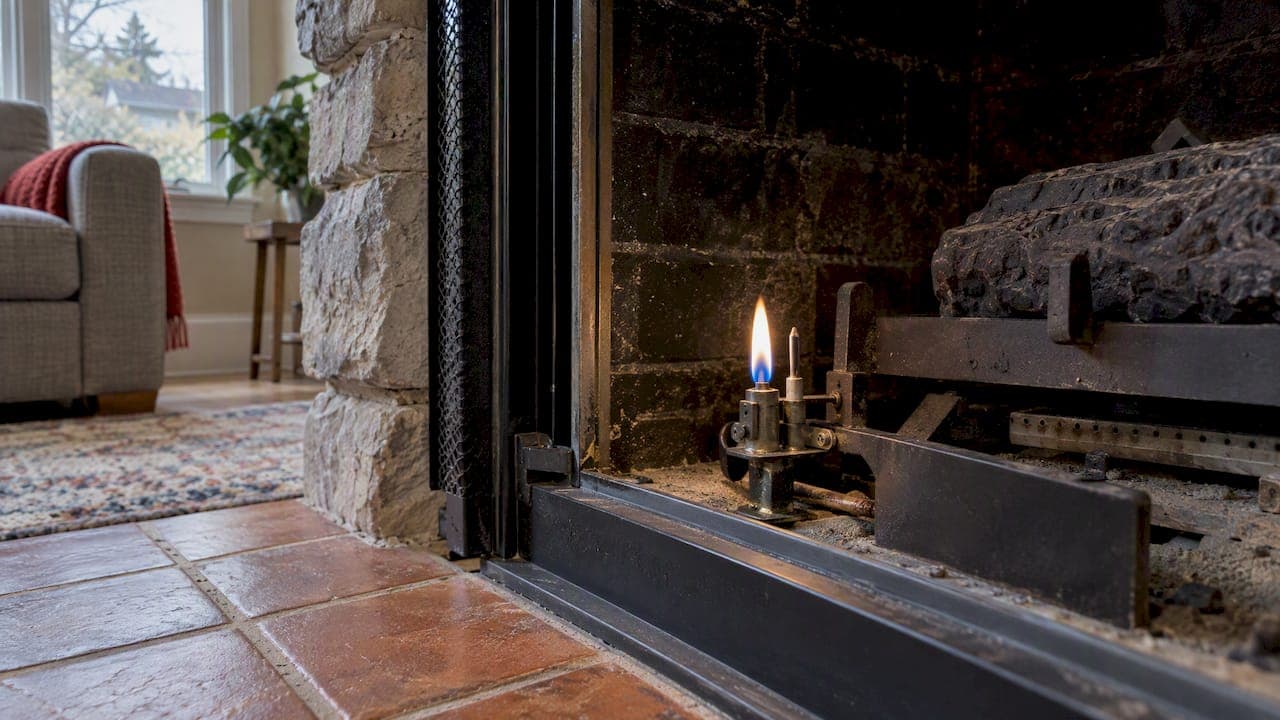
A pilot light that won't light or won't stay lit is a safety signal. Usually the cause is a worn thermocouple, a dirty pilot assembly, a weak gas valve connection or a venting problem. A few checks are safe for a homeowner. Everything involving gas parts belongs to a qualified technician. If there is any gas smell, stop. Leave the house. Call the gas company or the fire department.
This guide explains why pilots fail, what is safe to check, what repair typically costs and when to book a pro in the Seattle area.
TL;DR
- A pilot that lights but drops out when you release the knob most often points to a failing thermocouple or thermopile, the safety sensor that shuts off gas.
- Safe checks: confirm the system type in the owner's manual, replace batteries if the unit uses them, and make sure the vent is clear. Stop there.
- Smell gas? Do not light anything, do not touch switches, leave and call the gas supplier or fire department.
- One 2026 cost guide puts a thermocouple repair at roughly $150 to $350. Final pricing depends on the unit, parts and access.
- Repeated relighting is not a fix. It hides a fault. Get the unit diagnosed.
Table of Contents
- How a gas fireplace pilot is supposed to work
- Why the pilot won't light or won't stay lit
- Symptoms and likely causes
- What you can safely check yourself
- When to stop and leave the house
- Pilot light repair cost
- Why DIY pilot repair is a poor bet
- Our perspective
- Book a gas fireplace diagnosis in the Seattle area
- Prevent pilot problems before winter
- FAQ
- Sources
How a gas fireplace pilot is supposed to work
A standing pilot is a small flame that stays on and ignites the main burner. A sensor sits in that flame. When the flame is hot enough, the sensor tells the gas valve to stay open. When the flame dies, the sensor cools and the valve closes. That is the whole safety idea: no flame, no gas.
Not every fireplace works the same way. Regency explains that electronic-ignition fireplaces relight with a remote, while non-electronic millivolt systems need manual relighting. The owner's manual tells you which one you have. Check it first. The right troubleshooting path depends on it.
Three parts matter most:
- Pilot assembly: the flame, the hood and the orifice that feeds it.
- Thermocouple or thermopile: the sensor that proves the flame is there. A thermopile is a stronger version that also powers some millivolt controls.
- Gas valve: the part that opens and closes the gas flow.
Why the pilot won't light or won't stay lit
The causes are well documented in manufacturer instructions. Empire Comfort Systems lists a dirty or defective thermocouple, flame that does not hit the thermocouple correctly, a loose thermocouple connection at the valve, low gas pressure and venting problems such as down-drafts. Here is what each looks like in a real home.

Worn or dirty thermocouple
This is the classic failure. The pilot lights while you hold the knob. You let go, and it dies. The sensor is not proving the flame, so the valve shuts. Per the same Empire manual, a bad thermocouple will not let the pilot stay lit, because it is a safety device that cuts gas when it does not sense enough heat.
The sensor can fail from age. It can also fail from soot or corrosion on the tip.
Loose thermocouple connection
The sensor connects to the gas valve. A loose fitting weakens the signal. The same manual says the connection should be fully inserted and tightened to hand-tight plus a quarter turn. That is a gas component. Leave it to a technician who can leak-test the work afterward.
Dirty pilot assembly
Dust, pet hair and cobwebs gather around the pilot, especially after a season of sitting idle. A partly blocked pilot makes a weak, lazy, yellow flame. A weak flame does not heat the sensor enough. Gas fireplaces that sit unused through a Pacific Northwest summer are prime candidates.
Flame in the wrong place
A pilot flame needs to wrap the sensor tip correctly. If the pilot hood is bent, shifted or fouled, the flame misses it. The unit cannot prove the flame, so it shuts down.
Low gas pressure or a failing valve
If the gas supply is weak or the valve is worn, the pilot can sputter, shrink or fail to light. This is not a homeowner repair. It needs a pressure check with proper instruments.
Venting trouble
Down-drafts, blocked vents or a damaged vent cap can blow out the pilot. They can also push exhaust where it should not go. This is where a chimney or vent problem looks like a fireplace problem. A cracked flue liner, a blocked cap or debris in a vent run can all show up as a pilot that keeps dying. A chimney inspection separates a fireplace fault from a venting fault.

Dead batteries or a remote problem
On electronic-ignition models that are not hard-wired, Regency notes that fireplace batteries and remote batteries may need replacing. This is the cheapest fix on the list. Try it before anything else.
Symptoms and likely causes
| What you see | Likely cause | Who handles it |
|---|---|---|
| Pilot lights, dies when knob is released | Worn thermocouple or thermopile | Technician |
| Pilot stays on, burner will not start | Wall switch, remote, batteries or valve problem | Check batteries first, then technician |
| Weak yellow pilot flame | Dirty pilot assembly or low gas pressure | Technician |
| Pilot blows out in wind or when the house is sealed up | Down-draft or vent problem | Chimney and vent inspection |
| Pilot will not light at all, no gas sound | Gas supply off, valve fault or blocked orifice | Technician |
| Smell of gas | Gas leak | Leave. Call gas company or fire department |
What you can safely check yourself
Keep this list short. It is meant to rule out the easy stuff, not to turn a homeowner into a gas fitter.
- Read the manual. Confirm whether the unit is standing pilot, millivolt or electronic ignition.
- Replace batteries in the receiver and the remote if the unit uses them.
- Check the vent termination. The NFPA says vents for furnaces, stoves and fireplaces must be kept clear of snow build-up during and after winter storms. In the Seattle area that means leaves, needles and moss as well as the occasional snow event.
- Follow the manual's lighting steps exactly. One common instruction is to hold the control knob for 20 to 30 seconds after the pilot lights, before releasing it. Your model may differ. The manual wins.
That is where it ends. If the pilot still drops out after a proper relight, do not keep trying. Do not bend parts, bypass the sensor or hold the knob in permanently. Each of those defeats the safety system.
When to stop and leave the house
Gas smell changes everything. The NFPA's heating safety guidance says that if you smell gas, do not light the appliance. Leave immediately and call your local fire department or gas company.
A Regency gas insert manual adds the details: do not light any appliance, touch electrical switches or use a phone in the building, and call the gas supplier from a neighbor's phone.
Older valves deserve extra caution. The CPSC announced a recall of certain Robertshaw 7000-series valves that could keep releasing gas after the pilot went out. It told owners not to relight affected valves, even when no gas odor was present. If your fireplace is decades old and the pilot keeps failing, have a technician confirm what valve is installed.
Also stop and call a pro when:
- The pilot has gone out more than once in a week.
- You see soot, black staining or scorch marks around the opening.
- The glass is cloudy or sooty after the unit runs.
- A carbon monoxide alarm sounds. Leave first, then call the fire department.
- You have no manual and cannot identify the system.
Pilot light repair cost
Prices vary by unit, part availability and how hard the fireplace is to reach. We do not publish fixed prices for these jobs, so use outside numbers as a rough guide only. One 2026 cost guide says gas fireplace repairs average $200 to $1,000 and puts a thermocouple fix at about $150 to $350. Treat that as a ballpark.
What moves the price:
- Part type. A thermocouple costs less than a thermopile. A gas valve costs more than both.
- Brand and age. Older units can need hard-to-find parts.
- Access. Some inserts must be pulled forward or the glass front removed.
- Time of day. Emergency and after-hours calls cost more at most companies.
- The real fault. A pilot that will not stay lit is sometimes a vent issue, not a part issue.
Ask for the diagnosis in writing before work starts. A good technician names the failed part, shows it and explains the options.
Why DIY pilot repair is a poor bet
Content sites make this look easy. Replace the thermocouple, clean the pilot, done. For some people it is. But the manufacturers themselves draw a line. Empire states that its troubleshooting guide is mainly meant to help a qualified service person diagnose problems and carry out corrections safely.
There are three reasons to leave it.
- Gas connections need leak testing. A fitting that looks tight can still seep.
- Symptoms overlap. A weak pilot can be a dirty orifice, low pressure or a vent problem. Swapping a part can waste money and leave the real fault in place.
- Mistakes are quiet. A bypassed or mismatched sensor works until the day it matters.
Cleaning the glass or vacuuming the area around the unit is fine. Touching the gas train is not.
Our perspective
Most pilot calls we see start the same way. The fireplace worked last winter. It sat idle all summer. The first cold, wet week arrives, and the pilot will not stay on.
That timing matters. Idle units collect dust and spider webs. Sensors age quietly. And in our area, damp weather loads vents with debris and moisture. A gas fireplace is not maintenance-free. It is a small gas appliance with a chimney or vent attached.
Here is how we handle it:
- Diagnose before replacing. We check the pilot, sensor, valve connection and vent. We do not guess.
- Look at the vent too. A fireplace problem can start in the chimney. Cracks, blockages and failed caps all show up as pilot trouble.
- Show the work. We provide before-and-after photos so homeowners can see what was found and what was done.
- Quote upfront. Homeowners should know the price before approving the repair.
- Be available. We are available 24/7, and our technicians are licensed and insured.
Our advice is plain. Do not keep relighting a pilot that will not stay lit. It is a warning, not a nuisance. Have it checked before the heating season gets busy. Pre-season is also when we offer our best promotions.
— Damon
Book a gas fireplace diagnosis in the Seattle area
Prime Chimney serves homeowners and property managers across the Seattle metro area, including Bellevue, Kent, Bothell, Shoreline, Woodinville and Duvall. We diagnose and repair gas fireplaces, and we inspect the chimney or vent that serves them. Start with our gas fireplace and chimney repair services, or ask for a chimney inspection if you suspect the vent is the problem.

Buying a home with a gas fireplace? Have it inspected before closing. Pilot trouble is easier to negotiate before you own the unit. Thinking of replacing an old unit? See our fireplace installation service.
Prevent pilot problems before winter
The NFPA recommends that fuel-burning heating equipment and chimneys be inspected by a professional every year before cold weather. For a gas fireplace in western Washington, a sensible routine looks like this:
- Book service in early fall. Do it before the first cold snap, when schedules fill up.
- Have the burner area cleaned. Dust and webs are a leading cause of weak pilots.
- Have the sensor and valve connection tested, not just looked at.
- Inspect the vent and cap. Moss, debris and nesting material block airflow.
- Keep carbon monoxide alarms working on every level and near sleeping areas.
- Keep the area around the unit clear. No stored items, no décor on the hearth.
If the home also has a wood-burning fireplace or insert, schedule a chimney sweep in the same visit.
FAQ
Why won't my gas fireplace pilot light stay lit?
The most common reason is a worn or dirty thermocouple or thermopile that cannot prove the flame to the valve. Other causes include a loose sensor connection, a dirty pilot assembly, low gas pressure and venting problems. If it fails after a proper relight, stop and call a technician.
Will the pilot stay lit if the thermocouple is bad?
No. The thermocouple is a safety device. If it does not sense enough heat, it tells the valve to close the gas. A bad one makes the pilot drop out as soon as you release the knob.
How much does it cost to fix a gas fireplace pilot light?
One 2026 cost guide lists roughly $150 to $350 for a thermocouple repair, with wider gas fireplace repairs running $200 to $1,000. The price depends on the part, the unit and access. Ask for a written diagnosis before approving work.
Can I clean the thermocouple myself?
Some homeowners do. But it sits on a gas train, and manufacturers aim their troubleshooting guides at qualified service people. If you are not comfortable with gas parts, have a pro do it. They can also leak-test afterward.
What should I do if I smell gas near my fireplace?
Do not light anything or touch switches. Leave the building right away and call your gas supplier or the fire department from outside or from a neighbor's phone. Do not go back in until you are cleared.
Sources
- How to Start a Gas Fireplace & Re-Light the Pilot, Regency
- Installation Instructions and Owner's Manual, Empire Comfort Systems
- Keeping Your Community Safe, NFPA carbon monoxide toolkit
- How to Light a Gas Fireplace, Family Handyman
- Heating safety tips, NFPA
- Liberty LRI3E / Regency Horizon HRI3E Gas Insert manual
- CPSC, Robertshaw 7000-series valve recall
- Gas Fireplace Repair Cost 2026