
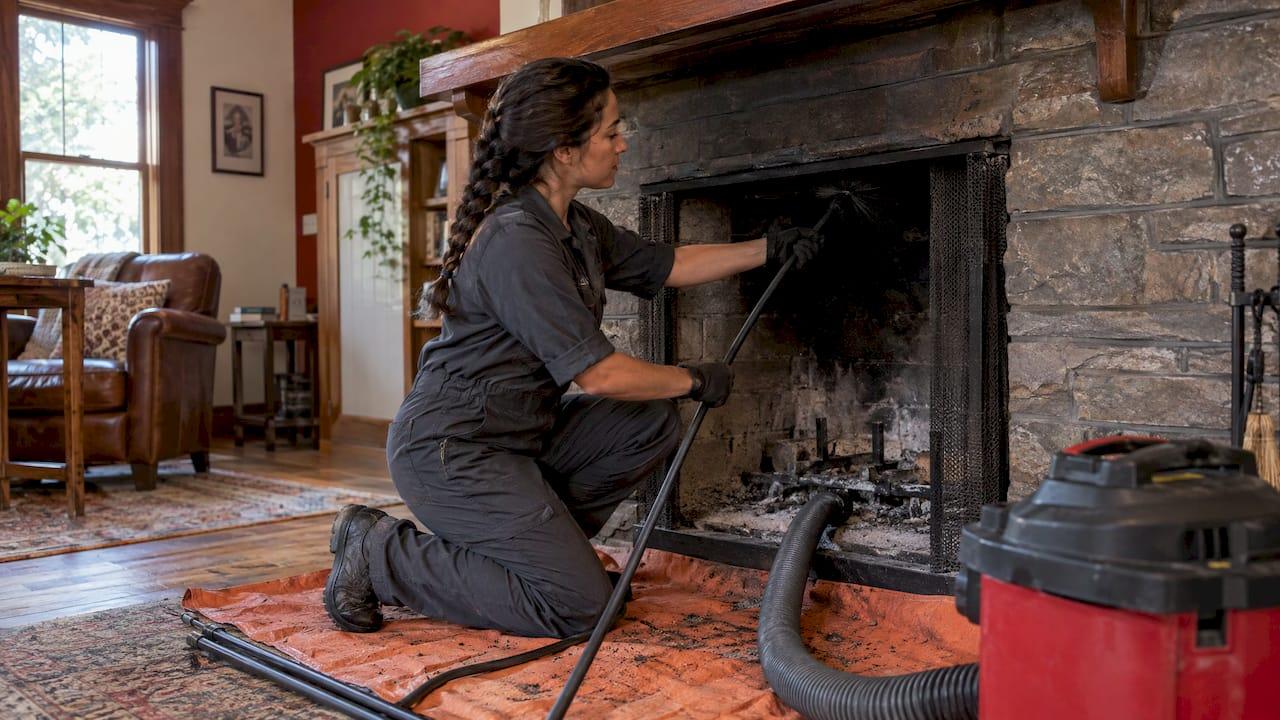
A standard chimney cleaning with inspection runs about $129 to $380 in the U.S. in 2026. Gas units sit at the low end. Wood stoves, inserts and multi-flue homes sit at the high end. A soot-only job stays in that range. Masonry, liner or cap problems are priced as a separate repair.
Know what the price covers before you compare quotes. Two numbers can look alike and buy very different work.
TL;DR
- Expect roughly $129 to $380 for a standard sweep and basic inspection on a wood-burning fireplace.
- Gas fireplaces cost less. Wood stoves and inserts cost more.
- Extra flues, animal nests, glazed creosote and camera inspections are quoted on top of the base price.
- Annual inspection is the national standard. Sweeping happens when buildup calls for it.
- A cheap sweep that finds damage and does nothing about it is not a saving.
Table of Contents
- What a chimney cleaning costs on average
- Chimney sweep cost by fireplace type
- What a standard sweep includes
- What raises the price
- Costs quoted on top of the sweep
- How often a chimney needs sweeping
- Why chemical products and shortcuts cost more
- How to compare chimney sweep quotes
- Prime Chimney in the Seattle area
- Perspective
- FAQ
- Sources
What a chimney cleaning costs on average
National figures agree more than they differ. One 2026 cost guide puts a standard residential cleaning and inspection at $129 to $380. Another sets the typical range for wood or pellet stove cleaning at $130 to $300.
That gives a working rule:
- Under $130: be careful. Ask what is left out.
- $130 to $250: a common spot for a single flue with a basic inspection.
- $250 to $380: larger jobs, harder access, stoves, inserts or heavier buildup.
- Above $380: usually extra flues, add-ons or a deeper inspection.
These are national numbers. Prices in the Seattle metro area shift with travel time, roof access and the season. A written quote for your own chimney beats any average.
Chimney sweep cost by fireplace type
The appliance changes the labor. Open masonry fireplaces are the baseline. Gas units need the least. Stoves and inserts take longer.
| Appliance | Typical cleaning cost | Why |
|---|---|---|
| Wood-burning masonry fireplace | $129 to $380 | Baseline job: flue, firebox, smoke chamber |
| Gas fireplace | $100 to $250 | Gas flues collect very little residue |
| Wood stove or insert | $200 to $450 | Often needs the unit pulled forward to reach the flue |
| Pellet stove | $150 to $300 | Smaller flue, but still needs careful servicing |
Another guide puts gas fireplace chimneys at $85 to $250. The ranges overlap, so treat the table as a guide, not a rate card.
Gas does not mean maintenance-free. Burners, pilot assemblies and venting can still fail. A gas fireplace that smells off, lights slowly or shows soot staining needs a diagnostic visit, not a guess. We handle gas fireplace diagnostics and repairs alongside sweeps.

What a standard sweep includes
A standard job typically covers brushing and vacuuming the flue, cleaning the firebox and smoke chamber, and a basic Level 1 visual inspection.
A good visit looks like this:
- Drop cloths and a vacuum go down to contain soot.
- The flue is brushed from the firebox or the roof.
- Debris is vacuumed from the firebox and smoke chamber.
- The accessible parts of the system are checked for soundness.
- The findings are explained, ideally with photos.
Photos matter. When a sweep shows before-and-after images, the price is easy to judge. That is how we document our work.
Level 1 is the routine inspection. It covers what can be seen without tools or opening walls. For a chimney that has had no change in use and no damage, that is the right level. Our chimney sweep service and chimney inspection service are built around this routine.
What raises the price
Costs vary with fireplace type, accessibility, cleaning frequency, location, cleaning method and season. In practice, these items move a quote most.
Number of flues
Many providers charge per flue. A home with a fireplace flue plus a furnace or water heater flue in the same chase typically adds $75 to $150 per extra flue. Count your flues before you call.
Buildup and creosote type
Light, dry soot brushes out quickly. Glazed creosote is hard and shiny. It is harder to remove and more dangerous, because it ignites easily. Severe glaze can call for chemical treatment quoted as its own line item. If a chimney has been neglected for years, expect a higher price and more time. See our creosote removal service for what that work involves.

Access
Steep roofs, tall chimneys and tight firebox openings add time. So do inserts that must be pulled out to reach the flue.
Animal nests and debris
Birds, squirrels and raccoons nest in flues, especially in uncapped chimneys. Nest removal is usually quoted separately. A missing cap is the cause. Fixing the cap is the cure.
Season
Fall is the busy season. Booking early in the year or during pre-season promotions can reduce what you pay. Ask what the current offer is when you call.
Costs quoted on top of the sweep
A sweep price is not a repair price. Level 2 and Level 3 inspections, major masonry or liner repairs, cap replacement, nest removal and creosote chemical treatments are typically separate line items or per-job quotes.
The key point: if an inspection finds masonry problems instead of soot, that is a different job with different pricing.
When a Level 2 inspection is needed
Level 2 applies when use changes, a Level 1 is not enough, the property is being sold, the chimney is being relined, or after a fire, weather or seismic event, or damaging malfunction. Level 2 includes a camera scan of the flue. Level 3 may require opening parts of the building or chimney.
Buying a home? A Level 2 is the sensible step before the first fire. Read what it covers in our guide to the Level 2 chimney inspection.
Common repairs a sweep can uncover
These are the problems we see most often:
- Cracked or crumbling crowns that let water in
- Missing or rusted caps
- Damaged or missing flue liners
- Loose or spalling brick and failed mortar joints
- Water stains on the ceiling or around the firebox
Wet Pacific Northwest weather makes crowns, caps and mortar the first places to fail. Water gets in, freezes, and widens each crack. Our chimney repair services cover crowns, caps, relining, rebuilds and waterproofing. For brick and mortar, see masonry repair. Homeowners south of Seattle can read about chimney repair in Tacoma.
How often a chimney needs sweeping
The national safety standard, NFPA 211, says chimneys, fireplaces and vents should be inspected at least once a year for soundness, deposits and clearances. Cleaning and repair follow if needed.
The Chimney Safety Institute of America (CSIA) recommends sweeping masonry fireplaces at 1/8 inch of sooty buildup, or sooner if glaze is present.
What this means for your budget:
- Yearly inspection is the baseline cost. Plan for it.
- A sweep follows only when buildup is found.
- An unused chimney still needs a look. Nests and deterioration happen anyway.
Paying for an annual inspection is cheaper than paying for a chimney fire repair.
Why chemical products and shortcuts cost more
CSIA says chemical products alone are not an adequate substitute for mechanical cleaning and inspection. Debris may remain, and hidden structural problems can go unnoticed.
The cheapest option is rarely the lowest total cost. A sweep that skips the inspection can leave a cracked liner in place for another season.
How to compare chimney sweep quotes
Two quotes only compare when they list the same work. Ask each company:
- Is a Level 1 inspection included in the price?
- How many flues does the quote cover?
- Is the appliance a fireplace, a stove, an insert or a gas unit?
- Will you provide photos of the flue and firebox?
- How are nest removal, glazed creosote and camera scans priced?
- Are you licensed and insured?
- Is the price written down before work starts?
Upfront pricing is a core part of how we work. Licensed and insured local technicians, photo-documented inspections and a written scope keep surprises off the invoice.
Prime Chimney in the Seattle area
We serve homeowners and property managers across the Seattle metro area, including King County, Tacoma and Gig Harbor. Services include sweeps, Level 1 to 3 inspections, creosote removal, repairs, relining, cap and crown work, waterproofing and gas fireplace diagnostics.
Pre-season promotions can lower the cost of getting your chimney ready. Book a sweep or inspection before the first cold week.

Start with the chimney sweep page or visit Prime Chimney to request a quote. Service pages also exist for Bothell homes and nearby areas.
Perspective
Price is the first question we hear. The better question is what the price covers.
A sweep is not only soot removal. It is the one visit each year when a trained technician looks at the whole system. That look catches a failing crown, a loose cap or a damaged liner while the fix is still small.
Our approach is simple. We inspect, we photograph, and we show the homeowner what we found. The quote states the scope in writing. If the chimney only needs a sweep, that is the job. If it needs repair, the photos explain why.
For most homes, a yearly inspection and a sweep when buildup calls for it is the safest and most predictable way to budget. Gas fireplaces need attention too. A diagnostic visit costs far less than a failed unit in January.
Damon
FAQ
How much does it cost to clean a chimney?
A standard cleaning with a basic inspection typically runs $129 to $380 in the U.S. Gas fireplaces cost less, and wood stoves and inserts cost more. Extra flues, nests and heavy creosote add to the total. Get a written quote for your own chimney.
Is an inspection included in the price of a sweep?
Usually a basic Level 1 visual inspection is part of a standard sweep. Level 2 camera inspections and Level 3 inspections are normally quoted separately. Ask before booking.
How often should a chimney be cleaned?
NFPA 211 calls for an inspection every year. Sweeping is done when buildup reaches 1/8 inch, or sooner if glazed creosote is present. A technician can tell you which applies after the inspection.
Why do gas fireplaces cost less to clean?
Gas flues collect very little residue, so the job takes less time. Burners, pilots and venting still need service. If a gas unit acts up, book a diagnostic.
Does a second flue cost more?
Yes. Many companies charge per flue, and an extra flue typically adds $75 to $150. Tell the company how many flues you have when you call.
Sources
- How Much Does a Chimney Sweep Cost in 2026?
- Chimney Sweep Cost: Cleaning and Inspection (2026)
- Chimney Cleaning Cost: 2026 Prices by Type and Level
- How Much Does a Chimney Sweep Cost? (Bob Vila)
- How Much Does a Chimney Sweep Cost? (HireLocal)
- CSIA Homeowner Resources