
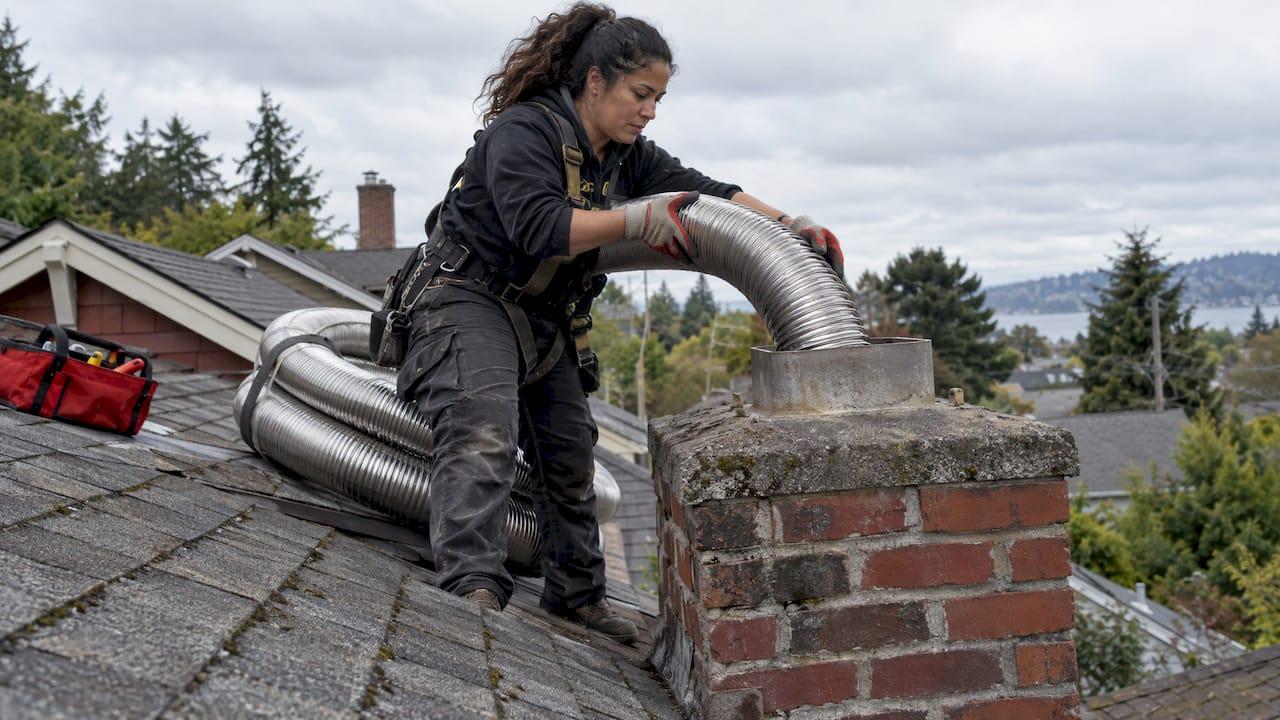
Most homeowners pay between $1,800 and $4,000 to replace or reline a chimney, and about $2,500 for the most common choice, a flexible double-wall stainless steel liner, according to Fixr's installation cost data. The range is wide because the liner type, the chimney height and what the camera inspection finds all move the price. A cracked or missing liner is a fire and carbon monoxide risk, so the first step is a camera inspection. In the Seattle metro area, Prime Chimney's inspection service is where that starts.
TL;DR
- Typical installed cost: $1,800 to $4,000 nationally, with about $2,500 for a flexible double-wall stainless liner. Extremes run from $625 to $7,000.
- Liner type drives the price: aluminum is cheapest, stainless is the standard, cast-in-place costs the most and lasts the longest.
- Labor is a large share of the bill. Fixr puts it at $500 to $1,500 for most installs.
- Repairs found during inspection (crown, masonry, smoke chamber) can add $200 to $4,000 or more.
- The liner must match your appliance. A cheaper wrong liner is not a saving.
Table of Contents
- What a chimney liner does
- Chimney liner replacement cost by type
- Match the liner to the appliance
- What is inside the price
- What pushes the price up
- Why the camera inspection comes first
- How to compare relining quotes
- How often a liner needs replacing
- Permits
- Prime Chimney in the Seattle area
- Our view
- FAQ
- Sources
What a chimney liner does
The liner is the inner lining of the flue. It carries smoke and gases out of the house. It also shields the brick and the wood framing around it from heat and moisture.
A damaged or missing liner lets heat and gas reach the walls. That means fire risk, carbon monoxide risk and moisture damage. The Chimney Safety Institute of America recommends that all chimneys have a liner, as Fixr notes.
Puget Sound homes face a second problem: rain and freeze-thaw cycles. Water gets into cracked tile and mortar and keeps working on the flue. Our note on freeze-thaw damage in Puget Sound chimneys explains how that happens.

Chimney liner replacement cost by type
Price depends first on the material. These are installed totals from published cost guides. Each guide uses its own sample of jobs, so ranges differ a little.
| Liner type | Typical installed cost | Notes |
|---|---|---|
| Aluminum | $625 to $2,250 | Gas appliances only. Short lifespan. |
| Flexible stainless steel | $1,800 to $4,000 | The most common choice. About $2,500 on average. |
| Rigid stainless steel | $1,500 to $4,500 | Used for wood burning. |
| Clay tile | $2,000 to $4,000 | Old standard. Cracks with moisture and heat. |
| Cast-in-place | $2,500 to $7,000 | Poured in the flue. Longest life. |
Sources: Fixr for the national average and the $7,000 top end, Bob Vila for aluminum at $625 to $2,250 installed, and Hammerio's repair cost guide for the rigid stainless range and the cast-in-place range. Clay tile comes from Erome Home's 2026 data.
Stainless steel: the standard
Stainless covers roughly 80% of residential replacements, per Erome Home. Grade matters. The 304L grade runs $1,500 to $4,000 installed and suits wood. The 316Ti grade runs $2,500 to $5,500 and is rated for every fuel.

Aluminum: cheap, short life
Aluminum is the lowest price. It is used for gas. Fixr says aluminum liners carry only about a two-year warranty, while stainless options carry ten years or more when inspections and cleanings are kept up.
Cast-in-place: highest price, longest life
A cast-in-place liner is poured into the flue and forms a seamless inner wall. It is often chosen for old chimneys with damaged tile. Builds and Buys lists $3,500 to $6,500 installed and a life of 50 years or more.
Match the liner to the appliance
The fuel you burn decides which liner is allowed. This is a safety rule, not a way to up-sell.
- Wood fireplace or stove: 304L stainless at minimum. Some high-efficiency stoves need 316Ti.
- Pellet stove: 316L or 316Ti.
- Oil furnace or boiler, and coal: 316Ti only.
- Mid-efficiency gas (80 to 83% AFUE): aluminum is legal, stainless is recommended.
- High-efficiency condensing gas (90%+ AFUE): 316Ti only.
That list comes from Erome Home's 2026 appliance guide. Sizing matters too. The liner must fit the appliance, not just the old flue. Old flues built for oil furnaces were often 10 to 12 inches wide. A modern 6 or 8 inch wood stove can't draw well in one without a properly sized liner, as Fire Pit Surplus explains.
Switching from a gas insert to a wood stove, or the other way, changes the liner you need. If you are converting an appliance, have the flue inspected first.
What is inside the price
A quote is more than the liner. Danbury Renovation's 2026 quote table breaks a typical job down like this:
| Line item | Typical range |
|---|---|
| Liner and fittings | $500 to $1,800 |
| Labor | $700 to $2,000 |
| Equipment and setup | $100 to $600 |
| Removal and disposal of the old liner | $150 to $800 |
| Permit or inspection | $50 to $400 |
Labor is a big share. Fixr says old liner removal is billed at $75 to $150 per hour and that most single-family straight-flue jobs take a day.
What pushes the price up
Chimney height and layout
Longer flues need more liner. Offsets, steep roofs and cathedral ceilings make the work harder and slower.
Damage found at inspection
The liner often fails because something else did first. Danbury Renovation puts minor flue repairs at $200 to $1,000. Substantial masonry rebuilding or smoke chamber work can add $1,000 to $4,000 or more.
Bob Vila lists other extras: about $900 for a broken crown, and about $400 for each extra appliance tied into the chimney. Related work we cover: smoke chamber repair and flashing repair.
Insulation
A wrap around the liner adds $150 to $400, per Hammerio. Insulated liners help the flue stay warm, which keeps the draft steady.
Multiple appliances
If more than one appliance vents into the same chimney, a larger liner may be needed. Forbes Home notes this raises the cost.
Why the camera inspection comes first
You cannot see a cracked liner from the firebox. A Level 2 inspection sends a camera up the flue. The Chimney Safety Institute of America's Level 2 standard requires video scanning of the interior. It is recommended before relining, when you change the appliance or fuel, at a property sale and after a chimney fire.
That matters for three kinds of reader:
- Home buyers: an inspection before closing shows whether a liner bill is coming.
- Owners of a gas fireplace or insert: a new appliance may need a different liner.
- Property managers: a camera record documents the condition of each unit.
See how video inspection works on a chimney.
How to compare relining quotes
A low number tells you little. Use these checks on every quote:
- Ask what diameter and length are quoted, and why.
- Ask whether a camera inspection is included.
- Ask whether the old liner is removed, and what that costs.
- Ask for materials and labor separately.
- Ask whether cleanup, disposal and the final appliance connection are in the price.
- Ask what the warranty covers and for how long.
Do not shave cost by undersizing or oversizing the liner. Danbury Renovation warns that the liner must match the appliance and venting requirements.
Liner installation is also not a weekend roof project. Fixr warns that roof access is a fall hazard and that poor installs can lead to fires and carbon monoxide exposure.
How often a liner needs replacing
There is no fixed date. Material sets the life. Builds and Buys lists 15 to 20 years for light-duty stainless, 20 to 30 years for heavy-duty stainless, and 50 years or more for cast-in-place and clay tile relining.
Signs that call for a camera check:
- Pieces of clay tile in the firebox
- White staining on exterior brick
- A strong smell from the fireplace when it is not in use
- A past chimney fire
- A new appliance on an old flue
Annual inspection is the rule of thumb. NFPA 211, the national standard for chimneys and vents, calls for at least one inspection a year.
Permits
Relining often needs a permit, and the rules are set locally. Check with your city or county building department before work starts. Permits typically run $50 to $200, per Bob Vila. Ask your installer to confirm whether one is needed for your address.
Prime Chimney in the Seattle area
We handle relining, rebuilds, cap and crown work and masonry repair for homeowners and property managers in the greater Seattle area. Our inspections are photo-documented, so you see what we see before you decide. Our team is licensed and insured and available 24/7.

We don't publish a flat liner price here, because the flue decides the number. A sweep, a camera inspection and a written scope are where a real quote begins. If creosote is the problem, see creosote removal. Pre-season promotions can lower the cost, so book before the burning season starts.
Our view
Rain finds the weak spot. It is almost always a liner, a crown or a joint.
We see the liner as a safety part first and a cost second. A liner that fits the appliance, with the flue photographed before and after, is what protects the house.
Our advice: inspect first. Know the condition of the flue before you pick a material. Then fix the water entry and the liner in the same visit when the chimney needs both. That is how a repair stays done.
Keep a photo record of every job. We provide before-and-after photos of our work so owners, buyers and property managers can see the result.
Damon
FAQ
How much does it cost to replace a chimney liner?
Most US homeowners pay $1,800 to $4,000, with about $2,500 for a flexible double-wall stainless liner (Fixr). Costs can start near $625 for aluminum and reach $7,000 for cast-in-place. Your total depends on chimney height, liner type and repairs found at inspection.
Is relining cheaper than rebuilding a chimney?
Usually yes. Bob Vila puts partial rebuilding of an old brick chimney at an average of $2,800 on top of the liner. If only the liner has failed, relining alone addresses it. A camera inspection tells you which job you have.
What is the cheapest safe way to line a chimney?
The cheapest safe liner is the right one for your appliance. Aluminum is allowed for mid-efficiency gas but not for wood, oil or coal. Choosing the wrong grade or size is a safety problem, not a saving.
Do I need a permit to install a chimney liner?
Often, yes. Requirements are set by your local jurisdiction, so check with your city or county building department. Permits typically cost $50 to $200. Your installer can confirm what applies at your address.
Sources
- Fixr: Chimney Liner Installation Cost
- Bob Vila: How Much Does a Chimney Liner Cost to Install?
- Forbes Home: How Much Does a Chimney Liner Cost?
- Danbury Renovation: Chimney Liner Replacement Cost
- Hammerio: Chimney Repair Cost
- Erome Home: Chimney Liner Replacement Cost 2026
- Builds and Buys: Chimney Liner Cost Guide
- Fire Pit Surplus: Wood Stove Installation Cost
- CSIA: Level 2 Inspection of a Masonry Fireplace