
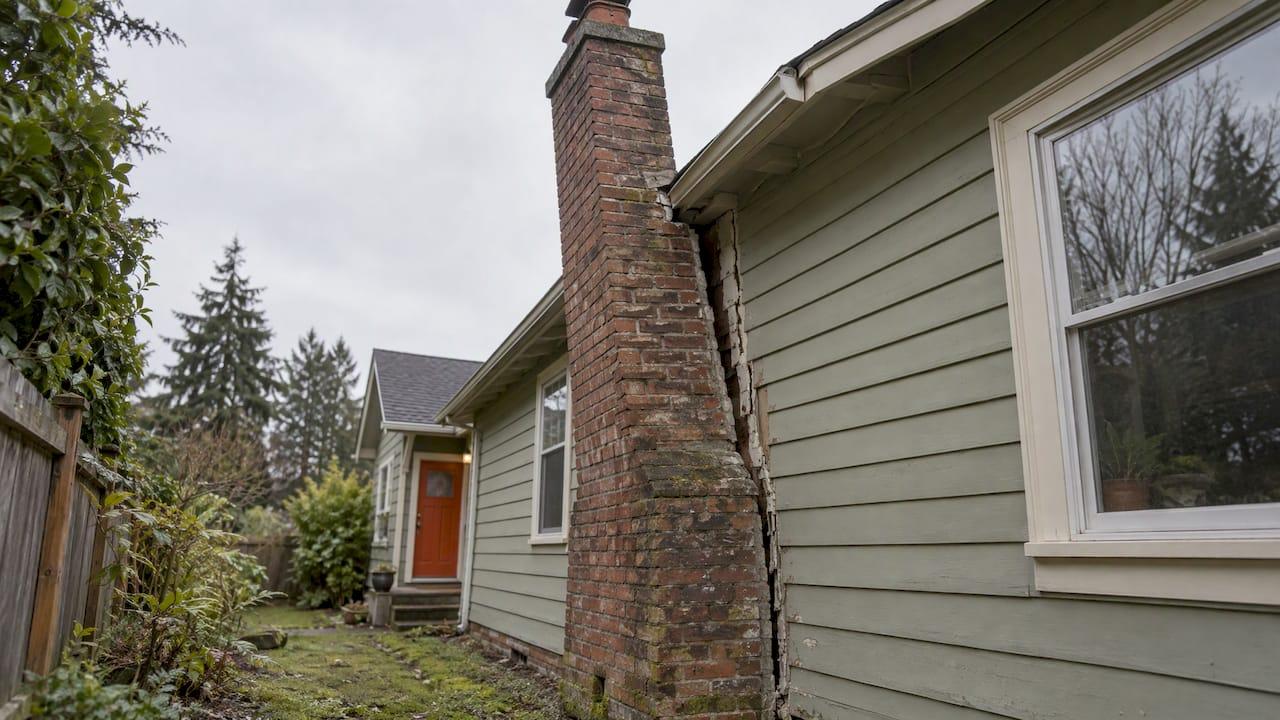
A leaning chimney is a structural problem, not a cosmetic one. It will not get better on its own, and it needs a prompt inspection to prevent costly follow-on damage, according to Bob Vila's repair cost guide. Depending on the cause and the size of the tilt, the fix is either stabilizing the footing or taking the chimney down and rebuilding it. Do not wait for the next storm to find out which.
TL;DR
- A leaning chimney can fall, damage the roof, and leak heat or gases into the home. Treat it as urgent.
- The usual cause is a failed footing or soil movement under it, not the bricks alone.
- Fixes range from pier underpinning to a partial or full rebuild. A professional inspection decides which.
- Published cost guides range from about $2,000 to $15,000 or more. Treat them as ballparks, not quotes.
- Insurance usually pays only when a covered event caused the damage, not for age or wear.
Table of Contents
- Signs a Chimney Is Leaning or Pulling Away
- Why Chimneys Lean
- How Dangerous Is a Leaning Chimney?
- How Inspectors Diagnose a Lean
- Repair or Rebuild: How It Gets Decided
- What Leaning Chimney Repair Costs
- Will Insurance Pay?
- Our Perspective
- Get a Leaning Chimney Looked At
- Protecting the Chimney After the Repair
- FAQ
- Sources
Signs a Chimney Is Leaning or Pulling Away
Look for these from the yard and the attic:
- The stack tilts away from the house.
- The gap between the chimney and the siding keeps widening.
- Flashing at the roofline is pulled apart.
- Cracks run through the adjoining wall.
These are the signs Dalinghaus Construction describes, as reported by Bob Vila. Stand back and look at the chimney against a vertical line, such as a door frame or the edge of the house. Take a dated photo. Repeat in a month. A gap that grows means the footing is still moving.
Inspectors do the same thing. InterNACHI says chimneys should be checked for visible tilting or separation, and that a gap should be measured often to see if it is increasing.
Why Chimneys Lean
A masonry chimney is a heavy, concentrated load. It needs its own footing, generally separate from the house footings. When that footing fails, the chimney moves.
Common causes:
- Undersized or shallow footing. Older builds often skimped here.
- Missing footing. Some chimneys sit on little more than fill.
- Poor or shifting soil. Bob Vila notes that soil can compress, erode, or swell and shrink with moisture, especially clay.
- Deteriorated footing or mortar. Water and age wear both down.
- No lateral support. The chimney is not tied to the structure well enough.
The Pacific Northwest adds a factor: long wet seasons. Saturated soil and poor drainage near a chimney base can speed up movement. A chimney with no cap or a cracked crown also lets water into the masonry. Water weakens mortar from the top while the soil weakens the base.
How Dangerous Is a Leaning Chimney?
Very. Bricks can fall on someone or crash through the roof. The gap at the siding lets in water and pests. A cracked liner can leak combustible gases into the home. Damaged liners or cracked masonry can also let heat reach nearby wood framing, which raises fire risk, according to LegalClarity.
What to do before the inspection
- Stop using the fireplace, stove, or furnace vented through that chimney.
- Keep people, pets, and cars away from the area below the chimney.
- Photograph the lean and the gap. Note the date.
- Call for an inspection the same week, and sooner after a storm.
- If you smell gas or smoke indoors, leave the house and call 911.
How Inspectors Diagnose a Lean
A proper inspection looks at more than the visible tilt. The inspector checks the gap, the footing and soil conditions where visible, the mortar, the flashing, and the flue liner. Structural leaning or separation is a critical finding that calls for a structural engineer, according to Shipshape's inspection guide. That guide also says major leaning may require a partial or full rebuild.
A deeper look at the flue matters because a chimney that has moved can have internal cracks you cannot see from the roof. A camera scan of the liner is the standard way to check. Our Level 2 inspection guide explains what that covers. Book a chimney inspection first, then decide on repairs from the findings.
Repair or Rebuild: How It Gets Decided
There are three main paths.
| Path | When it fits | What happens |
|---|---|---|
| Underpinning with piers | Footing failed, masonry still sound | Steel piers are driven to firm soil, brackets go under the footing, and jacks lift the chimney back toward plumb |
| Partial rebuild | Upper section damaged, base stable | Damaged masonry is taken down and rebuilt, often with a new liner, cap, and crown |
| Full rebuild | Major movement, cracked flue, or failed footing | The chimney is taken down and rebuilt on a proper footing |
Pier underpinning
Foundation repair crews often use steel helical piers to stabilize, and sometimes straighten, a leaning chimney without taking it apart. Bob Vila describes the process: piers go deep until they reach firm, load-bearing soil, brackets slide under the footing, and hydraulic jacks slowly lift the stack.
When rebuilding is the safer call
Some inspectors argue that if a chimney has moved more than a very small amount, perhaps under 3/16 inch, it should be taken down and rebuilt, because internal flue cracks can make it a flue gas and fire hazard. Strapping or bracing a leaning chimney to the house is also unlikely to work when the footing is the root problem. The mass is huge and can bend the wall.
A chimney that keeps moving after a repair likely never had an adequate foundation, per the same source. That points to a rebuild.

Permits
Significant work that affects the chimney or its supports usually needs a permit. InterNACHI advises contacting your local building department before starting. A licensed contractor should handle this for you.
What Leaning Chimney Repair Costs
No two jobs match, and published figures vary widely. Treat these as ranges from cost guides, not offers.
| Source | Range reported |
|---|---|
| Current Cost, January 2026 | About $2,500 to $15,000, most foundation jobs $5,000 to $10,000 |
| Current Cost, August 2026 | $3,000 to $9,000 typical, full rebuild $8,000 to $14,000 or more |
| LegalClarity, July 2026 | $2,000 to $4,000 to stabilize, $4,000 to $15,000 or more for partial or full rebuild |
Steel push piers run roughly $990 to $2,600 each installed, and helical piers $1,800 to $4,400 each, per LegalClarity. A job usually needs several piers.
What moves the price:
- Severity of the tilt
- Chimney height and material (brick or stone)
- Access to the base and the roof
- Whether masonry restoration is needed
- Flue liner requirements
We do not publish a fixed price for leaning chimney work, because the cause sets the scope. We give written pricing after an inspection.
Will Insurance Pay?
Usually only if a covered event caused it. Policygenius explains that policies typically cover damage from events like lightning or fire, but not age or normal wear. Chimneys already due for repair before the damage may not be covered. Documented photos and dates help. Ask your insurer before work begins, and keep the inspection report.
Our Perspective
Most leaning chimneys we hear about have been leaning for years. The homeowner noticed, hoped it would stop, and called after a storm or a new crack in the siding.
Our advice is simple. Get the chimney inspected before deciding anything. A lean is a symptom. The footing, the soil, the mortar, and the flue liner each tell part of the story, and the repair has to match the cause.
We document inspections with photos so you can see what we see. We are licensed and insured, we serve the Seattle metro area, and we are available around the clock for urgent problems. We handle repairs, rebuilds, relining, cap and crown work, masonry restoration, and waterproofing under one roof.
A chimney that is sound but cracked at the top needs masonry work. A chimney with a failed base needs a different plan. Either way, the earlier it is looked at, the more options you keep.
Damon
Get a Leaning Chimney Looked At
If your chimney tilts, shows a widening gap, or has new cracks nearby, we can inspect it and document what we find with photos. From there we explain whether you need repair, rebuilding, or relining. See our chimney repair and rebuild services, or book a chimney inspection.

We also handle masonry repair for cracked brick and failing mortar, and chimney relining when the flue is damaged. Our guide to chimney repair in Tacoma covers more warning signs.
Protecting the Chimney After the Repair
- Keep a cap and a sound crown in place so rain stays out of the masonry.
- Keep gutters and downspouts directing water away from the base.
- Schedule an annual inspection, especially after heavy rain seasons.
- Recheck the old gap with a dated photo each season.
FAQ
Can you fix a leaning chimney?
Often, yes. Pier underpinning can stabilize and sometimes straighten a chimney when the masonry is sound. If the flue is cracked or the chimney has moved a lot, a partial or full rebuild is the safer route. An inspection decides which.
How much does it cost to fix a leaning chimney?
Published guides range from about $2,000 to $15,000 or more, depending on tilt, height, access, and whether you need piers or a rebuild. Pricing for your home needs an on-site inspection.
Is a leaning chimney an emergency?
Treat it as urgent. It can drop bricks, let gases or heat reach the house, and let water in. Stop using the fireplace, keep people away from the area below it, and call for an inspection.
Will homeowners insurance cover a leaning chimney?
Only when a covered peril, such as lightning or fire, caused the damage. Age and wear are generally excluded. Check your policy and talk to your insurer before work starts.
Sources
- Bob Vila: Chimney repair cost guide
- Bob Vila: Tilting chimney
- InterNACHI: Chimney inspection, preventing collapse
- InterNACHI: How to inspect fireplaces, chimneys and stoves
- InspectApedia: Chimney movement causes
- InspectApedia: Leaning chimney repair methods
- InspectApedia: Ongoing chimney movement
- Shipshape: Chimney inspection guide
- Current Cost: Leaning chimney repair cost, January 2026
- Current Cost: Leaning chimney repair cost, August 2026
- LegalClarity: Leaning chimney repair cost
- Policygenius: Does home insurance cover chimney damage