
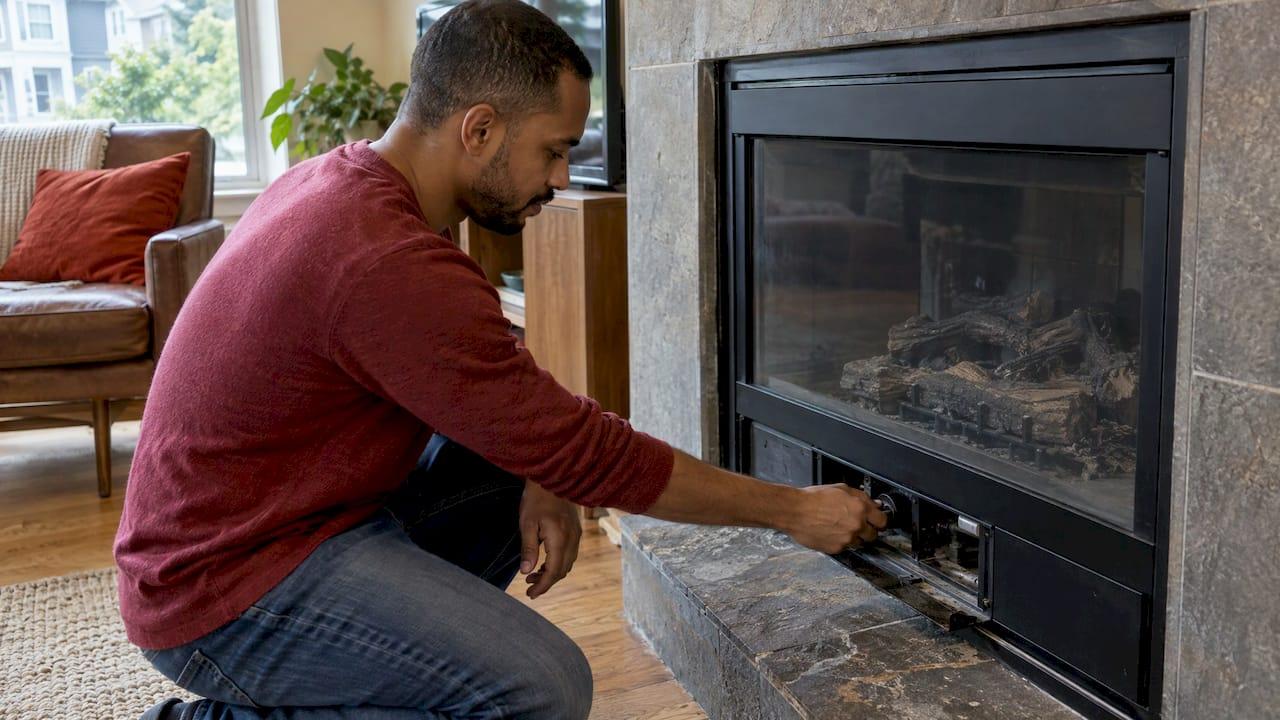
A gas fireplace that smells like gas is a safety issue until proven otherwise. Strong odor: leave the house, then call from outside. Faint odor: shut the unit off, ventilate and do not relight it. Only a brand-new unit in its first hours of burning has a good excuse for a smell, and even then the odor should be a faint "hot paint" smell, not rotten eggs.
This guide covers the steps to take first, the odors that can be normal, the causes of a gas smell that lingers, and what a qualified technician checks. Seattle-area homes, with their damp climate and older masonry, get a lot of these calls.
TL;DR
- Rotten-egg or sulfur smell: do not light anything, do not flip switches, leave, and call 911 or the gas utility from a safe distance.
- A faint chemical or hot-paint smell from a new or newly installed unit can be normal while paint and sealants cure. It should fade with burn time.
- A smell that returns, gets stronger or shows up when the fireplace is off is not normal. Shut the unit down and book a professional inspection.
- Common culprits: a pilot light that went out, a burner valve not fully closed, dirty burners, loose or blocked venting.
- Never DIY gas line or valve work. A licensed technician should diagnose and repair.
Table of Contents
- Step one: decide if it is an emergency
- Smells that can be normal
- What smells get mistaken for gas
- Why a gas fireplace smells when turned on
- Does a smell mean carbon monoxide?
- Vented, direct vent and ventless: which smells more
- What a professional checks
- When to shut it off and call
- Prevention that works
- Our perspective
- Book an inspection with Prime Chimney
- FAQ
- Sources
Step one: decide if it is an emergency
Start with the strength of the smell. Natural gas has no odor on its own. Utilities add a harmless chemical called mercaptan so a leak smells like rotten eggs, according to Connecticut's utility regulator. Propane is treated the same way.
Signs of a real leak go beyond smell. Indiana's utility regulator lists a sulfur or rotten-egg odor, a hissing sound, light-headedness and headache. Treat any combination as an emergency.
If the smell is strong
- Do not light the appliance or any match, lighter or candle.
- Do not touch light switches, garage door openers or phones inside the house. Those can spark.
- Walk everyone out, pets included.
- From a safe distance, call 911 or the gas company. The same state guidance says to leave first when the odor is strong and call from a safe location.
- Stay outside until the fire department or the utility says the house is clear.
NFPA's heating safety tips say the same: if gas is smelled around a gas heater, do not light it, leave right away and call the fire department or gas company.
If the smell is faint
Faint does not mean fine. Turn the fireplace control to off. Open nearby doors and windows. Check whether the pilot is lit or the burner is running. Do not relight. If the odor does not clear within minutes, or comes back, treat it as a leak and follow the steps above.
Call the gas utility even when unsure. Utilities respond to suspected leaks as a routine matter, and the call costs nothing.

Smells that can be normal
Not every odor is gas. A new unit, or one that sat unused all summer, can produce smells that are harmless.
New unit curing
When first lit, a gas fireplace gives off a slight odor for a couple of hours as paints, sealants and lubricants cure, per one manufacturer's manual. That manual says to open doors and windows to ventilate.
Another installation manual says curing paint, adhesives, silicone and manufacturing oil can create odor, and that it may last up to 40 hours of burn time. It advises ventilation and following the unit's own curing instructions.
Two points matter here:
- The curing smell is chemical or like burning paint. It is not a sulfur smell.
- It fades with use. Odor that stays the same or gets worse after the break-in period needs a technician.
Dust and seasonal buildup
A unit that has sat idle can burn off dust on the first fires of fall. A brief, dusty, warm smell that clears quickly is common. Dirty burners, blocked vents and a failing thermocouple can also change how a fireplace runs and smells, so a smell that does not clear after a few burns deserves a service call.
What smells get mistaken for gas
Gas and other odors near a fireplace overlap more than most people expect. Quick guide:
| Smell | Likely source | Action |
|---|---|---|
| Rotten eggs, sulfur | Gas leak (mercaptan added by the utility) | Leave, call 911 or the gas company |
| Hot paint, chemical, oily | New unit curing | Ventilate, burn per manual instructions |
| Dust, hot metal | Idle unit burning off buildup | Should clear in minutes |
| Burning plastic | Wiring, a blower, or something near the unit | Shut off, have it inspected |
| Damp, musty, smoky | Water in the chimney or old soot | Inspection and possibly waterproofing |
| Kerosene-like | Incomplete combustion, misaligned logs | Shut off, service the burner and logs |
The sulfur smell is the one to never explain away. If rotten eggs are in the air, assume gas.
Why a gas fireplace smells when turned on
A smell that appears only when the fireplace runs usually points to the appliance or its venting. Common causes:
Pilot light out or burner valve slightly open
Connecticut's regulator says a gas smell near an appliance can come from a pilot light that went out or a burner valve left slightly open. The same page says not to ignore the odor either way.
Pilot problems are common in cold, damp months. Our guide to gas fireplace pilot light repair covers causes and when to call a pro. Relighting a pilot that keeps going out does not fix why it keeps going out.
Dirty or misaligned burner and logs
Soot, dust and spider webs can clog burner ports. Logs shifted out of place can choke the flame. Both cause incomplete combustion, which makes odd smells and can release carbon monoxide. A yellow, lazy flame is a warning sign.
Venting trouble
A disconnected, loose or blocked vent can push exhaust back into the room. The Consumer Product Safety Commission notes that black stains on the outside of a chimney or flue and strange smells can mean pollutants are leaking into the house, and it says to check vents for looseness or disconnection.
In the Pacific Northwest, rain and moss can also affect caps, crowns and flue liners. A failed cap lets in water and debris. A cracked liner lets exhaust escape. Both are chimney repairs, not appliance tweaks.
Gas connection or valve leak
A leak at a fitting, shutoff valve or the appliance control is the most serious cause. It can smell strongest when the unit is off. Only a licensed technician or the utility should test and repair gas connections. No amount of soapy-water testing by an amateur replaces a proper pressure and leak check.
Does a smell mean carbon monoxide?
Not necessarily, and the reverse is just as true. Carbon monoxide has no smell. A fireplace can leak it with no odor at all. That is why a working carbon monoxide alarm on each level and near sleeping areas matters, along with annual inspection of the appliance and venting.

Headache, dizziness or nausea while the fireplace runs is a reason to shut it off, get everyone into fresh air and call 911. Do not wait to see if the symptoms pass.
Vented, direct vent and ventless: which smells more
The type of unit matters.
- Direct vent (sealed): Combustion is sealed off from the room. Gas odor should not occur in normal use, so any gas smell points to a problem with a seal, a connection or the venting.
- B-vent or open-burning gas logs: These draw room air and vent through a flue. A flue that is closed, blocked or damaged can send odors into the room.
- Ventless (unvented): These release combustion byproducts into the room. The Building America information sheet says unvented gas fireplaces should never be installed, and it recommends sealed-combustion appliances for better indoor air quality. Any ventless unit that smells deserves a professional look, and many owners choose to upgrade.
Is it necessary to open a window?
A properly installed sealed direct vent unit does not need an open window. For other types, ventilation during the first burns of a new unit is advised by manufacturers, as noted above. If a window needs to stay open for a fireplace to feel safe, that is a sign the system needs inspection, not a routine habit.
What a professional checks
A proper diagnosis follows the gas, the flame and the exhaust path. A thorough visit typically covers:
- Gas connections and valve: a leak test at the shutoff, the flex line and the control.
- Pilot assembly and thermocouple: flame size, color and sensing.
- Burner and logs: cleaning, port clearing and correct log placement.
- Glass, gaskets and seals: especially on direct vent units.
- Venting and termination: connections, blockages, cap condition and draft.
- Chimney and liner: cracks, water damage and soot, which can add their own odors.
For gas appliances that connect to an older masonry chimney, a camera look at the flue shows what the eye cannot. Our write-up on the Level 2 chimney inspection explains what that level covers and when it applies, such as after a change of fuel type or appliance.
We photograph our inspection findings so homeowners see what we see before approving any work.
When to shut it off and call
Shut the fireplace off and schedule service when any of these show up:
- A gas smell that returns after airing out.
- Odor that does not fade after a new unit's first burns.
- A pilot that keeps going out.
- Yellow or orange, sooty flames.
- Black staining around the fireplace opening or on the chimney exterior.
- Moisture, rust or white staining that suggests water is getting in.
- Soot on the glass that keeps coming back.
- Headaches or dizziness while the unit runs.
Leave the fireplace off until a technician clears it. A cold evening is cheaper than a leak.
Prevention that works
Most gas fireplace smells trace back to skipped maintenance. Simple habits help:
- Annual inspection and cleaning, before the first cold snap. Pre-season is when schedules are open and the unit is easiest to check.
- Carbon monoxide and natural gas alarms placed per their manufacturer's instructions, with batteries tested.
- A clear zone around the fireplace. No stored boxes, cleaners or paint cans nearby.
- A weatherproof cap and sound crown, so rain stays out of the flue.
- Attention to change. A fireplace that suddenly smells, sounds or looks different is giving a warning.
Our perspective
Most homeowners who call us about a gas smell have waited a day or two. They hoped it would pass. Our advice is the opposite: act the same hour.
A gas fireplace is simple when it works and unforgiving when it does not. The smell is the early warning, and it is a good one. We want homeowners to listen to it.
In the Seattle area, wet weather adds a second layer. Water gets into caps, crowns and liners, and a damaged chimney changes how a gas appliance vents. A burner cleaning alone will not fix a venting problem, and a venting fix will not help a bad valve. That is why we check the whole path, from the gas connection to the top of the chimney.
We are licensed and insured, and we offer 24/7 availability. We document inspections with before-and-after photos and aim to give upfront pricing, so the work makes sense before it starts. The best outcome is a unit that is checked every year and never smells at all.
Damon
Book an inspection with Prime Chimney
Smell resolved or not, the next step is the same: have the appliance and chimney checked. Prime Chimney serves homeowners and property managers across the Seattle metro area, including Tacoma and Gig Harbor. Our team handles gas fireplace diagnostics and repair, chimney inspections at Levels 1 to 3, sweeps and chimney repairs. Pre-season promotions can lower the cost of getting this done before cold weather.

If the smell is strong right now, leave and call 911 or the gas utility first. Once the house is cleared, schedule gas fireplace and chimney repair with us.
FAQ
Is it normal for a new gas fireplace to smell?
Yes, a mild chemical or paint-like odor is common at first. Manufacturer documentation describes it as paints, sealants and lubricants curing, lasting from a couple of hours up to about 40 hours of burn time depending on the unit. Ventilate the room. A rotten-egg smell is never part of this process.
Why does my gas fireplace smell like gas when it is off?
A gas smell while the unit is off points to a pilot that went out, a valve not fully closed or a leak in the connection. Do not relight it. Ventilate, leave if the odor is strong and call 911 or the gas company. Have a licensed technician test the system before any further use.
Can a gas fireplace smell like gas without a leak?
Sometimes. Dust, curing paint, dirty burners, misaligned logs or venting problems can all produce odors that resemble gas. The rotten-egg smell from added mercaptan is the exception: treat it as a leak until a professional or the utility confirms otherwise.
Do ventless fireplaces smell more?
They can, because combustion byproducts stay in the room. Federal Building America guidance says unvented gas fireplaces should never be installed. A ventless unit that smells should be inspected, and a sealed direct vent replacement is worth discussing with a technician.
Should I open a window when using a gas fireplace?
Opening a window helps during the first burns of a new unit, as manufacturers advise. A sealed direct vent unit should not need it day to day. If a smell makes a window feel necessary, shut the fireplace off and have it checked.
Sources
- What To Do If You Smell Natural Gas, Connecticut PURA
- Heating safety tips, NFPA
- Learn to recognize the signs of a gas leak, IURC
- Gas fireplace owner's manual, curing odor
- Gas fireplace installation manual, odor and burn time
- BSC Information Sheet 601, Sealed Combustion
- CPSC seasonal furnace inspection release