Sweep a wood stove chimney at least once a year. Sweep sooner if creosote builds up, smoke backs into the room, or a heavy burning season is behind you. In the Seattle area, wet wood and damp winters make this a safety job, not a cosmetic one. A certified sweep cleans the flue and checks the whole system for cracks and damage while the work is done.
This guide covers the schedule, the warning signs, what a professional sweep does, and how to prepare for the visit.
TL;DR
- Clean and inspect the chimney and stovepipe at least once a year, per CSIA and NFPA 211. Twice a year for heavy use.
- Creosote at 1/8 inch means sweep. Any glaze means sweep now.
- Smoky odor, poor draft, or smoke pushing into the room are warning signs.
- A sweep also checks for cracks that let smoke or heat reach the house.
- Book before the heating season. Pre-season is the right time.
Table of Contents
- Why a Wood Stove Chimney Needs Cleaning
- How Often to Sweep a Wood Stove Chimney
- Signs the Chimney Needs Cleaning Now
- What a Professional Wood Stove Chimney Sweep Does
- Inspection Levels: Which One You Need
- A Note on Cleaning It Yourself
- The 3-2-10 Rule and Cleaning
- Burn Practices That Slow Creosote
- Perspective: Why We Sweep Before the Season
- Book a Wood Stove Chimney Sweep in the Seattle Area
- Getting Ready for the Visit
- FAQ
- Sources
Why a Wood Stove Chimney Needs Cleaning
Wood smoke leaves residue. That residue is creosote, a tarry byproduct of burning wood. Mass.gov says most chimney fires start with creosote buildup.
The Ohio State Fire Marshal states that some creosote is unavoidable. It also calls regular cleaning the most important safety practice after proper installation.
The heat of a chimney fire is the danger. MU Extension reports temperatures up to 2,000 degrees Fahrenheit. That can warp metal chimneys and crack the tile liner in masonry chimneys. A cracked liner is a path for heat and smoke into the walls of the house.
Stoves add their own risk. MU Extension explains that high-efficiency stoves send less heat up the flue. Cooler flue surfaces collect creosote faster. A tight, efficient stove can need sweeping more often than expected.

How Often to Sweep a Wood Stove Chimney
The baseline is once a year. CSIA says chimneys, fireplaces, and vents should be inspected at least once a year. The check covers soundness, freedom from deposits, and correct clearances. Cleaning and repairs follow if needed. That wording comes from NFPA 211, the national standard. The 2024 edition covers annual inspection and cleaning in its maintenance chapter.
State and local agencies say the same. The Oregon DEQ says an annual cleaning removes creosote and identifies problems. The Idaho DEQ recommends a professional inspection every year.
When once a year is not enough
Some stoves need more. The Town of Victor, NY guide says to sweep twice a year in these cases:
- More than a cord of wood burned in a season.
- Wet or unseasoned wood burned.
- Heavy creosote noticed.
This Old House adds that frequent use, more than three times a week in the heating season, or burning softer woods like pine, can mean cleaning more than once a year.
In western Washington, firewood often sits in damp air. Wood that looks dry can still burn wet. Burn seasoned hardwood and watch the buildup.
The best time to book
Late summer or early fall. The Victor guide recommends cleaning before the heating season begins. Pre-season also means a repair, if one turns up, gets done before the first cold snap. Our pre-season promotions are built for exactly this window.
Signs the Chimney Needs Cleaning Now
Do not wait for the calendar if any of these show up. The Victor guide lists them:
- Strong, smoky odor when the stove is not in use.
- Sluggish airflow or poor draft.
- Smoke pushing back into the room during a fire.
One more sign matters most: glaze. CSIA recommends sweeping at 1/8 inch of sooty buildup, and sooner if any glaze is present. Glazed creosote is hard, shiny, and burns hot. Other agencies set the line at 1/4 inch, including Alaska DEC. Do not use the higher number as a target. Sweep early.
If you smell smoke in the house, act at once. The US EPA says to shut down the appliance, open a window, and make sure the flue is open. Then check the chimney system carefully and call a professional installer or chimney sweep.
What a Professional Wood Stove Chimney Sweep Does
A sweep is more than a brush. The job is cleaning plus a safety check. Here is how a visit runs.
- Protect the room. Drop cloths go down. The stove area is sealed so soot stays out of the house.
- Look first. The sweep inspects the flue and stovepipe with a light before any brushing. Heavy or glazed buildup shows up here.
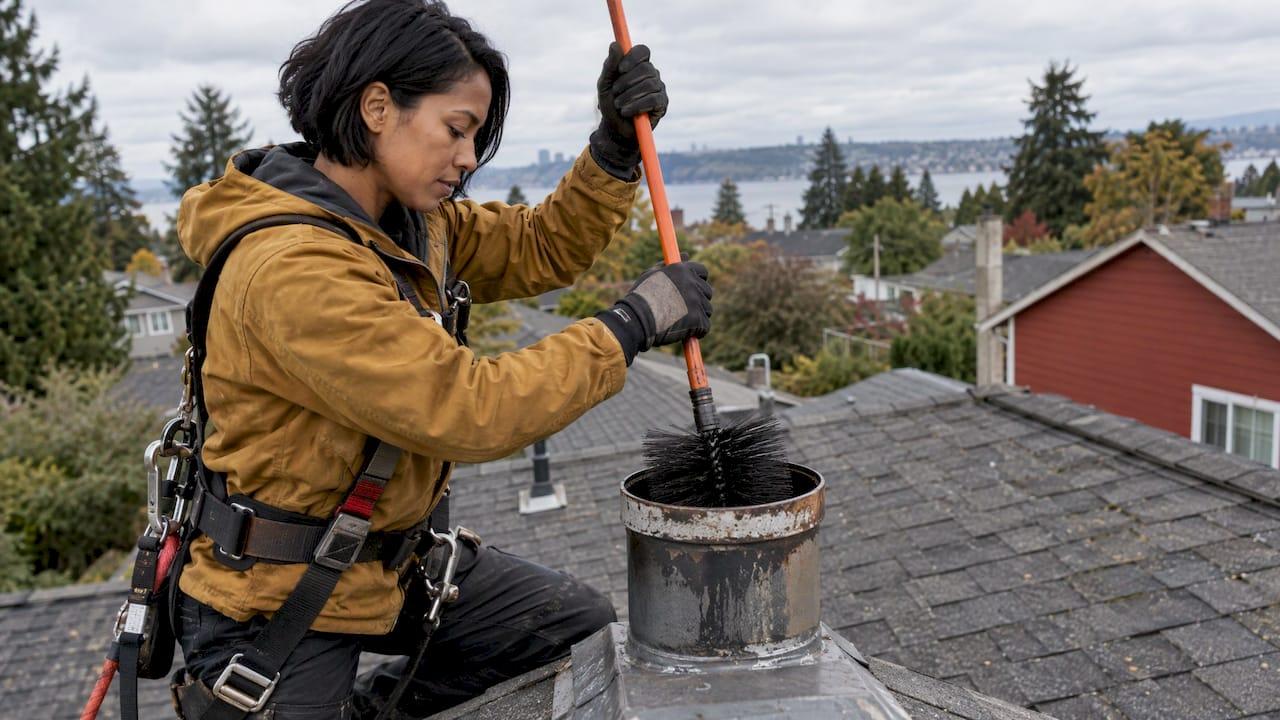
- Brush the system. The sweep cleans the stovepipe, the flue, and the areas where creosote collects. MU Extension notes the heaviest concentration is usually in the upper third of the chimney.
- Clean the lower sections. The smoke shelf, firebox area, and connector get cleaned. Debris is removed with an industrial shop vacuum.
- Final check. The sweep confirms the creosote is gone and looks for cracks, loose joints, and damage.
That last step matters. The EPA says an annual inspection includes looking for chimney cracks. Cracks can let smoke into the home or expose the chimney's parts to high temperatures that may cause a fire.
A cap that is missing or damaged is another common finding. Water and animals get in. A cap or crown repair is a small job when caught early.
Smoke chamber and hard-to-reach areas
Creosote forms in all parts of the chimney. Home Depot notes the smoke chamber just above the firebox is where fire risk is highest. It is also hard to reach from the top. If a smoke chamber has rough or damaged surfaces, read our guide to smoke chamber repair.
Inspection Levels: Which One You Need
A routine sweep often includes a basic visual check. Some situations call for more.
| Situation | Inspection level |
|---|---|
| Annual sweep, same stove, no changes | Level 1 |
| New stove, new fuel type, or a change to the system | Level 2 |
| After a chimney fire, or when hidden damage is suspected | Level 3 |
| Home purchase or transfer | Level 2 is the usual step |
A Level 2 inspection adds camera work in the flue. It also covers accessible attic and crawlspace areas. Details are in our guide to the Level 2 chimney inspection.
Buying a house with a wood stove? Do not rely on the seller's word. Book an inspection before closing. Our chimney inspection service covers all three levels.
A Note on Cleaning It Yourself
Many homeowners wonder about doing it alone. The reality is physical. MU Extension warns that cleaning is strenuous and pulling a brush the full height of the chimney can strain the back and other muscles.
Some other points from the research:
- The ladder needs a structurally sound chimney to lean on.
- A household vacuum is the wrong tool. Fine soot can ruin its motor, per MU Extension.
- Alaska DEC says to wear a facemask to avoid breathing creosote particles.
- The Ohio State Fire Marshal warns that improper tools can damage the chimney. It says to use proper tools or a professional sweep.
A 30-foot flue, a steep roof, or a fear of heights is a clear reason to hire out. So is any glaze or heavy buildup. A pro handles the roof, the tools, and the inspection in one visit.
A tip from MU Extension: watching a sweep work is educational. It shows what a clean flue looks like and what the sweep finds along the way.
The 3-2-10 Rule and Cleaning
The 3-2-10 rule is a chimney height rule, not a cleaning schedule. In general terms it says a chimney should rise 3 feet above the roof where it exits and stand 2 feet higher than anything within 10 feet. It governs how the chimney is built, and it ties back to the standards that guide chimney work.

Why it matters for a sweep: a chimney that is too short can draft poorly. Poor draft means smoky rooms and more creosote. If draft problems continue after a clean flue, the height may be the cause. A technician can check this on site.
Burn Practices That Slow Creosote
Cleaner burning means less creosote between sweeps.
- Burn only dry, seasoned hardwood. Mass.gov states this reduces creosote accumulation.
- Avoid wet or unseasoned wood.
- Do not smolder the fire for hours. Cool, slow fires deposit more residue.
- MU Extension suggests a hot, intense fire for at least a half hour daily with the damper open. That burns off small amounts of creosote. It does not replace sweeping.
These habits lower the buildup. They do not remove the need for an annual inspection.
Perspective: Why We Sweep Before the Season
Most chimney trouble starts small. A thin layer of creosote. A hairline crack. A cap that is loose.
In the Seattle area, rain finds every weak spot. Wood stoves run through long, damp months. Fires burn slow. Creosote builds.
We sweep and inspect together. A clean flue is half the job. The other half is finding the crack, the failed crown, or the damaged liner before it becomes a fire or a leak.
Our crews photograph the work. You see the before and after. You see what we found. That is how we keep it simple and clear.
Book in late summer or early fall. Pre-season is when we offer savings, and it is when repairs fit easily into the schedule. Do not wait for the first cold night.
Damon
Book a Wood Stove Chimney Sweep in the Seattle Area
We serve homeowners and property managers across the Seattle metro area, including King County, Tacoma, and Gig Harbor. Our crews are licensed and insured, and we offer 24/7 availability. Every inspection is photo-documented.
Start with our chimney sweep service. If your stove has heavy buildup, our creosote removal service is built for that job.

If the inspection finds damage, we repair it. That includes relining, crown and cap work, and masonry. See our chimney repair services. Pricing is shared upfront. For a general picture of what a sweep costs, read our chimney cleaning cost guide.
Near Bellevue or Bothell? See our pages for Bellevue and Bothell.
Getting Ready for the Visit
A little prep makes the visit faster.
- Let the stove cool fully. Make sure the fire is completely out.
- Clear furniture and rugs from around the stove.
- Note any smells, smoke spillage, or draft problems. Tell the sweep.
- Know your wood type and how much you burn. It helps set the right schedule.
- Have the stove model and age on hand if you know them.
After the sweep, ask for the photos and the findings. Keep them with your home records. They help at resale and for insurance questions.
FAQ
How much does it cost to have a wood stove chimney swept?
Cost depends on chimney height, access, the amount of buildup, and the stove setup. We do not publish a flat price here. Our chimney cleaning cost guide explains what drives it, and we give upfront pricing before work starts.
What dissolves chimney creosote?
A sweep removes creosote mechanically with brushes and tools. Chemical products are sold for light buildup, but heavy or glazed creosote calls for a professional. If you see glaze, book creosote removal and an inspection.
Can a wood stove chimney be cleaned in the same visit as an inspection?
Yes. We sweep and inspect together. The sweep clears the flue, and the inspection looks for cracks, loose parts, and damage. Photos document what we find.
Is once a year enough for a wood stove?
For many homes, yes. CSIA and NFPA 211 set the baseline at once a year. Heavy use, wet wood, or softer woods like pine can mean twice a year. Any glaze or smoke spillage means sweep now.
Sources
- CSIA Homeowner Resources
- NFPA 211, 2024 edition preview
- Mass.gov: Fireplace, Wood Stove, and Chimney Safety
- Ohio State Fire Marshal: Burning Wood Safety
- MU Extension: Cleaning Stovepipes and Chimneys
- Oregon DEQ: Tips for Cleaner Wood Burning
- Idaho DEQ: Woodstove Best Burning Practices
- Town of Victor, NY: Clean your chimney and wood stove
- This Old House: How and when to clean your chimney
- Alaska DEC: Device operation brochure
- US EPA: Wood-Burning Installation and Maintenance
- Home Depot: How to Clean a Chimney