
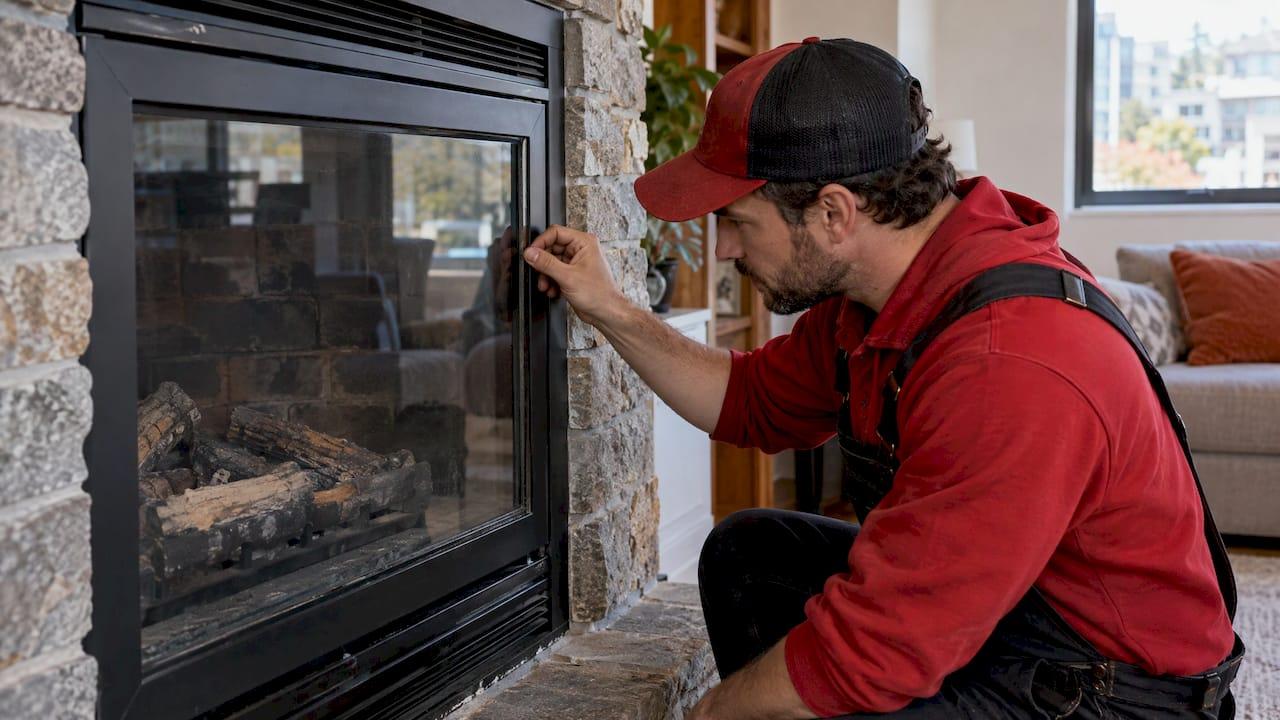
A gas fireplace insert that will not light, smells odd or leaves black soot needs a qualified technician. Do not wait for the cold snap. Gas appliances fail quietly, and the first warning is often small. Repair covers the pilot, burners, glass seal, venting and gas connections. Most of it is work for a licensed pro, not a weekend project. Here is what to watch for, what a service visit covers, what repair costs, and when replacement makes more sense.
TL;DR
- Smell gas, see soot at the vent, or have an insert that will not stay lit? Stop using it and call a qualified technician.
- A proper service visit checks the pilot, burners, flame safety system, glass and gasket, venting and every accessible gas connection.
- Professional gas fireplace repair typically runs $200 to $1,000, per Bob Vila's cost guide (figures as of December 2023). Annual checkups cost far less.
- Manufacturers call for inspection at least once a year by a qualified service person.
- Gas valves, gas lines and insert replacement are licensed work. Do not open them up yourself.
Table of Contents
- Signs a Gas Fireplace Insert Needs Repair
- What a Repair Visit Covers
- Common Causes Behind Common Faults
- What You Can Safely Do Yourself
- How Often an Insert Needs Service
- Gas Insert Repair Cost
- Repair or Replace?
- The Chimney Behind the Insert
- Perspective
- Get Your Insert Checked Before the Cold Sets In
- FAQ
- Sources
Signs a Gas Fireplace Insert Needs Repair
Inserts rarely fail all at once. They give signals. Learn them.
The insert will not light. The pilot may be out, the flame safety system may not be proving the flame, or a control part may have failed. Our guide to gas fireplace pilot light repair covers the usual causes and when to call.
The flame lights, then drops out. The safety system is shutting the gas off. That is the system doing its job. Something upstream is wrong.
Black soot around the vent terminal. Soot at the vent means the fireplace is not burning properly and needs service, according to Structure Tech Home Inspections. The same source notes that logs set out of the manufacturer's position can push flames into the wrong spot. The result is incomplete combustion and soot.

Exhaust coming back into the room. Many gas fireplaces leak exhaust into the home, and Structure Tech says a worst-case draft test can detect it. That is a technician's test, not a guess.
A gas smell. Treat it as urgent. Read what to do right now if a gas fireplace smells like gas before you do anything else.
Cloudy, cracked or leaking glass. The glass and gasket seal the firebox. A bad seal is a repair item.
A fan that rattles, hums or stops. Often a smaller fix. See gas fireplace fan repair.
A dead remote or slow response. Batteries in the remote transmitter and receiver are part of a standard annual check. Sometimes that is all it is.
Warning signs that mean stop now
Turn the unit off and call for service if any of these show up:
- Rotten-egg odor or a hissing sound near the unit or gas line.
- Soot staining on the glass, the wall or the vent cap.
- Headaches, dizziness or nausea when the fireplace runs. These are common carbon monoxide symptoms. Leave the house and call 911 if symptoms are strong.
- Visible rust, corrosion or damage on the firebox, vent or control valve.
- Any part of the unit has been under water. The Empire Fireplace manual says not to use a fireplace that has been under water.
Working carbon monoxide and smoke alarms on every level are a basic backstop. They do not replace service.
What a Repair Visit Covers
A good visit is a full safety check, not just a part swap. The American Hearth product manual lists what annual service should include. It is a useful yardstick for any visit:
- Inspect the pilot and burners for proper operation. Replace damaged parts.
- Test the flame failure response. The safety shut-off must de-energize in no more than 30 seconds.
- Confirm the main burner lights within 4 seconds of the gas valve opening.
- Vacuum and clean debris from the firebox.
- Check the glass and gasket for a proper seal, and clean the glass with a suitable fireplace glass cleaner.
- Check latches and door retention parts.
- Inspect the log set and decorative media.
- Replace batteries in the remote transmitter and receiver.
- Inspect the venting and vent termination cap for damage, corrosion, sooting or obstruction.
- Check all accessible gas tubes, connections and pipes for leaks.
That last item matters most. A leak test is the part you cannot do by eye.
Why photos matter
A repair report should show the problem, not just describe it. We document inspections with before-and-after photos, so the homeowner or property manager sees the worn part, the soot or the damaged cap, and sees the fix.
Common Causes Behind Common Faults
| Symptom | Likely areas to check | Who handles it |
|---|---|---|
| Will not light | Pilot, flame safety system, control parts, batteries | Qualified technician |
| Lights, then shuts off | Flame sensing, burner, venting | Qualified technician |
| Soot at vent or on glass | Log position, burner flame, combustion, vent | Qualified technician |
| Gas smell | Connections, valve, gas line | Shut off, then licensed pro |
| Fan noise or failure | Blower, wiring, debris | Technician |
| Foggy or cracked glass | Gasket, seal, glass panel | Technician |
| Rust or corrosion | Firebox, vent, valve | Technician |
The table is a map, not a diagnosis. Two units with the same symptom can have different causes. That is why the visit matters.
What You Can Safely Do Yourself
Some light tasks are normal homeowner care. Check the owner's manual for what your model allows. Keep the area around the unit clear. Keep bedding, rugs and lint away from the opening. The Empire manual notes that excessive lint from carpeting or bedding may require more frequent cleaning. Make sure the remote batteries are fresh.
The line is clear on the gas side. The gas control valve is a sealed unit. BCST Valves says manufacturers do not recommend internal repair because of the safety risk. They list the cases where the valve needs replacing: an external gas leak, a valve stuck open or closed, persistent error codes, physical damage, corrosion, or an old valve with no parts available.
Do not open the valve. Do not work on gas connections. Do not try to bypass a safety switch. Call a pro.

How Often an Insert Needs Service
Annually. The Empire manual says the appliance should be inspected before use and at least once a year by a qualified service person. Napoleon adds that inserts have combustion and venting parts that need periodic attention. It says professional service can spot problems with the burner, pilot, venting and gas connections. Follow your manual's schedule.
In the Pacific Northwest, the best time is before the first cold, wet stretch of fall. Rain and damp can reach the vent cap and chimney. Book early, because the weeks before the first freeze fill up.
Gas Insert Repair Cost
Prices vary by unit, part and access. As a benchmark, Bob Vila reports that professional gas fireplace repair typically costs $200 to $1,000. An annual checkup runs $75 to $125, and a yearly chimney inspection averages about $450. Those are national figures from December 2023, so expect local pricing to differ.
What moves the price:
- The part. A battery or a thermocouple is a different bill from a valve or blower.
- The brand and age. Older units can have parts that are hard to find.
- Access. An insert set deep in masonry takes more time to reach.
- Venting work. A damaged liner or cap adds a second repair.
- After-hours calls. Emergencies may be priced differently.
We do not publish a flat price for gas fireplace repair, because the fault decides the cost. We give upfront pricing before the work begins, so there is no surprise on the invoice.
Repair or Replace?
Most faults are repairable. Replacement comes up when the unit is old and the repair is large. Common triggers include:
- The unit is around 15 to 20 years old and needs a valve, burner or firebox repair.
- Parts are discontinued.
- The firebox is cracked, warped or rusted through.
- The glass is cracked or crazed and no panel is available.
- One repair costs a large share of a new unit's price.
- The insert is an older, poorly performing model and you want a safer, more efficient one.
A technician should give an honest repair-versus-replace view with the model number in hand. Replacement itself is licensed work. Gas lines and venting carry real risk, including leaks and carbon monoxide. If the new unit needs new gas or electrical work, expect a longer job. Our fireplace installation page covers that side.
The Chimney Behind the Insert
An insert is only as safe as the flue it vents into. Cracked liners, a missing cap or a damaged crown let water in. Water damage shortens the life of the insert and the masonry. If the vent shows soot, corrosion or blockage, the flue needs a look too.
Two guides help here. Smoke chamber repair explains parging and costs. Leaning chimney repair covers structural movement. For a general view on service costs, see what a chimney cleaning really costs.
Perspective
Most gas insert calls we get start the same way. The homeowner noticed something small and waited. A flicker. A faint smell. A bit of soot on the glass.
We tell people to act on the small sign. A short visit now costs less than a failed part later, and it keeps the family safe.
Our approach is simple. We inspect the whole system: pilot, burners, glass, vent and gas connections. We photograph what we find. We explain it in plain words and quote before we start. We are licensed and insured, local to the Seattle area, and available 24/7.
A gas insert is a safety appliance first and a comfort feature second. Treat the annual visit like a smoke alarm test. Do it every year, and do it before the season starts.
Damon
Get Your Insert Checked Before the Cold Sets In
Prime Chimney serves homeowners and property managers across the Seattle metro area, including King County, Tacoma and Gig Harbor. We repair gas fireplaces, inspect venting, and handle the chimney work that sits behind them. Every job comes with photos and upfront pricing, and we run seasonal pre-season promotions.

Ready to book? Start with our chimney repair and gas fireplace services. If the flue also needs attention, add a chimney inspection. Tacoma homeowners can read our gas fireplace repair guide for Tacoma.
FAQ
Is it necessary to service a gas fireplace insert every year?
Yes. Manufacturers such as Empire say a qualified service person should inspect the appliance before use and at least annually. Annual service catches pilot, burner, venting and gas connection problems early. Follow the schedule in your owner's manual.
Can I clean a gas fireplace insert myself?
Light care is usually fine, such as keeping the area clear and replacing remote batteries. Anything involving the gas valve, gas connections, burner or venting should go to a qualified technician. Gas control valves are sealed units, and internal repair is not recommended.
Is it hard to replace a gas fireplace insert?
It is not a do-it-yourself job. Replacement involves gas lines, venting and sometimes electrical work, and it should be done by a licensed professional. Time depends on whether the existing gas line and vent can be reused.
How much does gas fireplace insert repair cost?
Professional repair typically runs $200 to $1,000 nationally, per Bob Vila's December 2023 figures. The part, the unit's age and the access decide where you land. Ask for a quote before work starts.
What should I do if my insert smells like gas or will not light?
Stop using it. For a gas smell, leave the area and follow our gas smell guide. For a unit that will not light, do not force it. Call a qualified technician to check the pilot and safety system.
Sources
- Bob Vila: Gas Fireplace Insert Cost
- Structure Tech Home Inspections: How to inspect a gas fireplace
- Empire Fireplace manual (2025)
- American Hearth product manual (2025)
- BCST Valves: Gas control valve troubleshooting
- Napoleon: What to know before buying a gas insert