
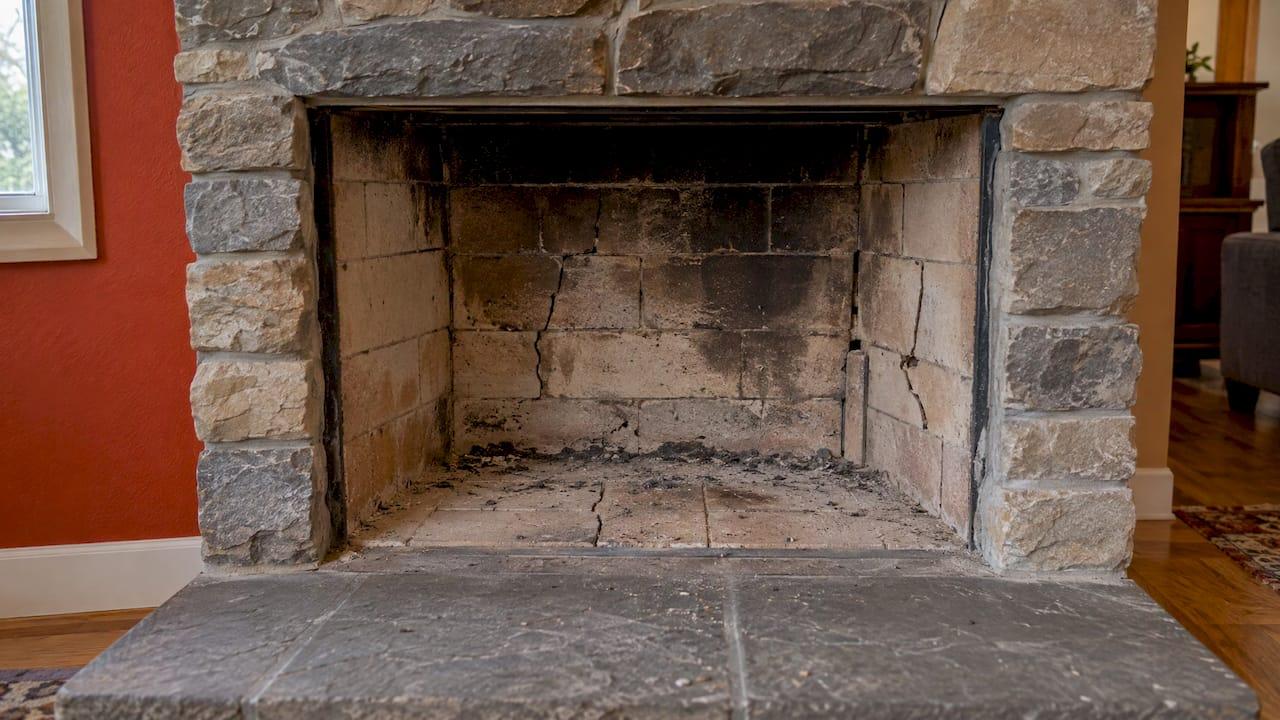
A firebox with loose brick, crumbling mortar or wide cracks needs a professional look before the next fire. Small mortar gaps are repaired by repointing. Broken or shifted firebrick is replaced. A firebox that has failed across the floor or back wall is rebuilt. Published US estimates put crack repair in the hundreds to low thousands of dollars and a full rebuild far higher. In the Seattle area, Prime Chimney starts with a licensed inspection, so the repair matches the damage.
TL;DR
- Stop using the fireplace if firebrick is loose or a crack is wider than 1/4 inch. Mortar joints eroded more than 1/2 inch also call for repair.
- Rain that runs down the chimney is a leading cause of eroded mortar and weak brick. Fix the water path, not just the firebox.
- Repairs range from repointing and panel swaps to a full firebox rebuild. Published US estimates run from about $300 to $8,000, depending on the work.
- Hidden damage behind the firebox is why an inspection comes first. A Level 2 inspection is recommended when a Level 1 cannot settle the question.
- Book the inspection before burn season, not after the first cold snap.
Table of Contents
- What the firebox does and why it fails
- Signs your firebox needs repair
- Is it safe to burn with a cracked firebox?
- How professionals repair a firebox
- What affects the cost of firebox repair
- Fix the water, or the damage returns
- Who this is for
- What to do this week
- Why we treat the firebox as part of the whole chimney
- Book a firebox inspection in the Seattle area
- FAQ
- Sources
What the firebox does and why it fails
The firebox is the chamber where the fire burns. In a masonry fireplace it is lined with refractory firebrick, a dense brick made to take direct heat. The bricks are held by mortar joints. Together they shield the framing and masonry behind them from the fire.
When that lining breaks down, heat and sparks reach places they should never reach. That is why firebox damage is a safety issue first and a cosmetic one second.
Three things wear a firebox down:
- Heat cycles. Every fire expands the brick and mortar. Every cooldown shrinks them. Over years, joints open and brick cracks.
- Water. Rainwater runs down the chimney and seeps into brick and mortar. Moisture erodes mortar joints and weakens brick. In the wet Puget Sound climate, an uncapped or leaking chimney sends water straight to the firebox.
- Age and the wrong materials. Firebrick is meant to be laid with refractory mortar. Building codes now call for medium-duty refractory mortar because ordinary portland-cement mortar does not hold up as well over time.
Signs your firebox needs repair
Look at the firebox with a flashlight when the fireplace is cold. This Old House lists these common signs:
- Cracked or crumbling bricks
- Loose mortar between bricks
- Visible gaps or holes in the firebox walls
- Discoloration or staining on the surrounding walls
Chimney inspection standards give a more exact checklist. The CSIA Level 1 inspection of a masonry fireplace looks for loose or missing mortar in the firebox and cracked or damaged firebrick. It also notes loose brick on the hearth and any separation where the outer hearth meets the firebox.
The numbers that matter
The CSIA homeowner's guide gives two clear thresholds:
- Repair the firebox before use if firebrick is loose or any crack is wider than 1/4 inch.
- Mortar joints eroded more than 1/2 inch point to a needed repair.
A hairline crack in a brick is not the same as a gap you can slide a coin into. If you are unsure which one you have, treat it as the second and have it checked.
Is it safe to burn with a cracked firebox?
Not if the damage meets the thresholds above. A cracked or open firebox can let heat and embers reach the structure behind it. Do not light a fire until a qualified chimney professional has looked at it.
Call for an inspection sooner when any of these happen:
- A chimney fire or other operating malfunction
- A storm, earthquake or other weather or seismic event
- A home purchase
- A change in how you use the fireplace, such as burning more often
The CSIA Level 2 standard, based on NFPA 211, recommends a Level 2 inspection in exactly these cases: when a sale is happening, when conditions of use change, after a fire, weather or seismic event, or when a Level 1 is not enough to judge whether the fireplace is serviceable. Our guide to the Level 2 chimney inspection explains what it covers.
Annual care matters too. The U.S. Fire Administration advises a professional inspection and cleaning of the chimney each year.
How professionals repair a firebox
The fix depends on how far the damage goes. In general, repairs fall into four levels.
1. Repointing worn mortar joints
When the brick is sound but the joints are eroded, the technician rakes out the weak mortar and packs the joints with new refractory mortar. Fine Homebuilding describes this as the simplest approach: rake out and repoint the joints between the bricks with refractory mortar. The material matters. Ordinary mortar from a hardware shelf is the wrong product for a firebox.

2. Replacing cracked or loose firebrick
Cracked brick is cut out and replaced, then set in refractory mortar. The same source notes that a third option is to remove the damaged bricks and replace them. The new brick has to sit tight against its neighbors so no gap opens behind the lining.
3. Replacing panels in a prefabricated firebox
Many newer fireplaces use a metal firebox with manufactured panels, not site-laid brick. Those panels are replaced as parts. Fit and heat rating are set by the manufacturer, which is one more reason to leave the swap to a trained technician.
4. Rebuilding the firebox
When the floor, back wall or side walls have deteriorated beyond patching, the lining is taken down and rebuilt. Rebuilding is also the answer when cracks keep returning or when the structure behind the firebox is affected. A rebuild is a masonry job, and it usually goes together with repairs to the water source above.
On the web you will find plenty of videos on patching cracks with cement. They miss the point. A patch over a failing lining hides the problem and leaves the cause in place. The right fix starts with finding out why the damage happened.
What affects the cost of firebox repair
No honest price comes without a look at the firebox. Published estimates give a sense of the range, but they are national averages, and Seattle-area labor and access conditions differ.
| Type of work | Published US estimate | Source |
|---|---|---|
| Firebox crack repair | $500 to $2,000 (average $1,250) | Current Cost, 2026 |
| Firebox masonry repair | $300 to $2,000 | Current Cost, 2026 |
| Prefab panel replacement | $100 to $300 | Fixr |
| Firebox rebuild | $2,000 to $8,000 | Fix Up First, 2026 |
| Full chimney rebuild | $10,000 to $30,000 or more | Fix Up First, 2026 |
Treat these as ranges, not quotes. They show the shape of the problem: catch it early and the repair is small. Wait until water and heat have worked through the lining and the bill moves toward a rebuild.
What moves the price on your job:
- Crack size and number of cracks. A few hairline cracks cost less than a lining that has opened up in several places.
- Brick type. Standard firebrick is simpler than old or unusual brick that must be matched.
- Access. A tight opening or a fireplace set deep in a finished wall takes more time.
- Labor. Current Cost reports labor at $75 to $125 per hour, and per-square-foot firebox repair at $40 to $90.
- The cause. If water is entering at the crown or cap, that repair belongs in the same estimate.
- Cleanup. Soot-stained brick around the opening may need cleaning once the repair is done. Masonry cleaning methods and costs vary with the surface.
Prime Chimney's positioning is upfront pricing and photo-documented inspections, so you see the damage and the plan before work starts. Service prices are quoted per job, since each firebox is different.
Fix the water, or the damage returns
A firebox repair that ignores water is a short-term fix. Water is the cause behind much of the deterioration, so check the parts of the chimney above the firebox too.
- Chimney cap. The CSIA guide recommends chimney caps to keep out rain, snow and sleet. A missing or rusted cap is an open door for the Northwest's rain.
- Crown. A cracked crown slab lets water into the masonry below.
- Mortar joints and brick on the stack. Open joints soak up water and pass it down.
- Spark screen. The same guide recommends a spark screen so sparks and embers stay inside the fireplace.
If the stack itself is cracked, see our guide to cracked chimney repair. A stack that has started to tilt is a separate and more serious matter, covered in leaning chimney repair. If the damage extends up into the area above the firebox, smoke chamber repair may be part of the job.
Who this is for
Homeowners who see cracked brick or open joints and want to know how serious it is. First-time buyers who were told the firebox "looks old" in a general home inspection: that is the moment a Level 2 inspection makes sense, because a sale is one of the cases the standard names. Property managers with several units, where one failing firebox is a liability and an annual inspection is the cheapest control.
If your fireplace is gas, the firebox problem may be a burner or pilot issue instead. See gas fireplace insert repair for signs, costs and who to call.
What to do this week
- Stop using the fireplace if you see loose firebrick, a crack wider than 1/4 inch or deep mortar gaps.
- Photograph the damage in good light. Include the floor, the back wall and the hearth edge.
- Look for stains or dampness on the wall around the fireplace. They point to water.
- Book an inspection and tell the technician about any chimney fire, storm or recent purchase.
- Get the repair scope in writing, with the cause and the fix listed together.
- Schedule the sweep and repair before the first heavy burn season. Pre-season is when homeowners save most with Prime Chimney.
Why we treat the firebox as part of the whole chimney
We see a firebox as the part of the system that tells the truth first. Cracked brick and washed-out mortar rarely start in the firebox. They start with water above it, with heat the lining was never built for, or with years of use without an inspection.
That is why we begin with the inspection. We look at the firebox, the chimney above it and the cap and crown, and we document what we find with photos. You see the same damage we see. Then the repair is a plan, not a guess.
Our licensed and insured local technicians handle sweeps, inspections, masonry repair, rebuilds, relining, caps and crowns, and waterproofing. One crew can fix the firebox and the leak that caused it. That is the difference between a repair that lasts and one you pay for twice.
If you are not sure whether your firebox is a repair or a rebuild, do not light another fire to find out. Have it looked at.
Damon
Book a firebox inspection in the Seattle area
Prime Chimney serves homeowners and property managers across the Seattle metro area, including King County, Tacoma and Gig Harbor. Our team provides Level 1 to 3 inspections, masonry repair, rebuilds, relining, cap and crown installation and waterproofing, and is available 24/7. Start with a chimney inspection to find out what your firebox needs, or go straight to chimney repair if you already know.

For damage that is mostly in the brick and mortar, our masonry repair service covers it. Tacoma homeowners can also read about chimney repair in Tacoma.
FAQ
Are fireplace repairs expensive?
It depends on how early you catch the damage. Published US estimates for firebox masonry repair start around $300, and crack repair averages about $1,250 in one 2026 cost guide. A full firebox rebuild is estimated at $2,000 to $8,000. A written estimate after an inspection tells you where your fireplace falls.
How much does a new firebox cost?
A firebox rebuild is estimated at $2,000 to $8,000 in the US. Prefab fireboxes and panel replacements are priced differently from site-built brick. The size, the brick and the access decide the final figure.
Can I use my fireplace with a cracked firebox?
Only after a professional has checked it. Per the CSIA guide, repair the firebox before use if firebrick is loose or a crack is wider than 1/4 inch. Cracks can be harder to judge than they look, so a Level 1 inspection is the safe first step.
How often should the fireplace and chimney be inspected?
Once a year. The U.S. Fire Administration advises an annual professional inspection and cleaning. Add an inspection after a chimney fire, a storm or earthquake, a change in use or when you buy a home. See chimney cleaning cost for what a sweep involves.
Does the firebox need a licensed technician for a gas fireplace?
Yes. For gas units, manufacturers such as Monessen say installation and service should be done by qualified personnel, with gas connections made by a licensed or certified tradesman. The Monessen manual spells this out for its vent-free fireboxes.
Sources
- The Homeowner's Guide to Chimneys, Fireplaces and Woodstoves (CSIA)
- CSIA Level 1 Inspection of a Masonry Fireplace
- CSIA Level 2 Inspection of a Masonry Fireplace
- How To Restore A Firebox, This Old House
- Repairing a firebox, Fine Homebuilding
- Fireplace Repair Costs in the U.S., Current Cost
- Chimney Repair Cost 2026, Fix Up First
- Fireplace Repair Cost, Fixr
- Fireplace and Woodstove Safety, U.S. Fire Administration
- Monessen BUF36 and BUF42 Installation and Owner's Manual
- Masonry cleaning methods and costs