Book a chimney sweep in Gig Harbor once a year, before the first fire of the season. Choose a pro who sweeps and inspects, and who shows you photos of what they find. Washington State Patrol says to have the chimney and fireplace inspected and cleaned every year by a professional. Wet Puget Sound winters make that more pressing, because water finds every weak spot in a chimney.
This guide covers what a sweep does, what an inspection adds, when to call, what to do if a gas fireplace acts up, and how to pick a company.
TL;DR
- Have a professional inspect and clean your chimney every year, as Washington State Patrol advises. Do it before the first fire.
- A sweep removes creosote and debris. An inspection checks the liner, cap, crown, flashing, damper and masonry. Ask for both.
- Smoke smell, cracks, or a gas fireplace that smells or will not light means stop using it and call a pro.
- Homebuyers and property managers should get a documented chimney assessment, not a quick look.
- Pick a licensed, insured company that gives photos and a written scope before work starts.
Table of Contents
- What a chimney sweep actually does
- Sweep or inspection: which one do you need?
- How often to sweep a chimney in Gig Harbor
- Warning signs: stop and call
- Creosote: why it is the main reason to sweep
- Gas fireplaces: do they need a sweep?
- Common repairs a sweep may find
- Buying a home or managing property in Gig Harbor
- Safe burning habits between visits
- How to choose a chimney sweep in Gig Harbor
- Our perspective
- Book your sweep and inspection
- FAQ
- Sources
What a chimney sweep actually does
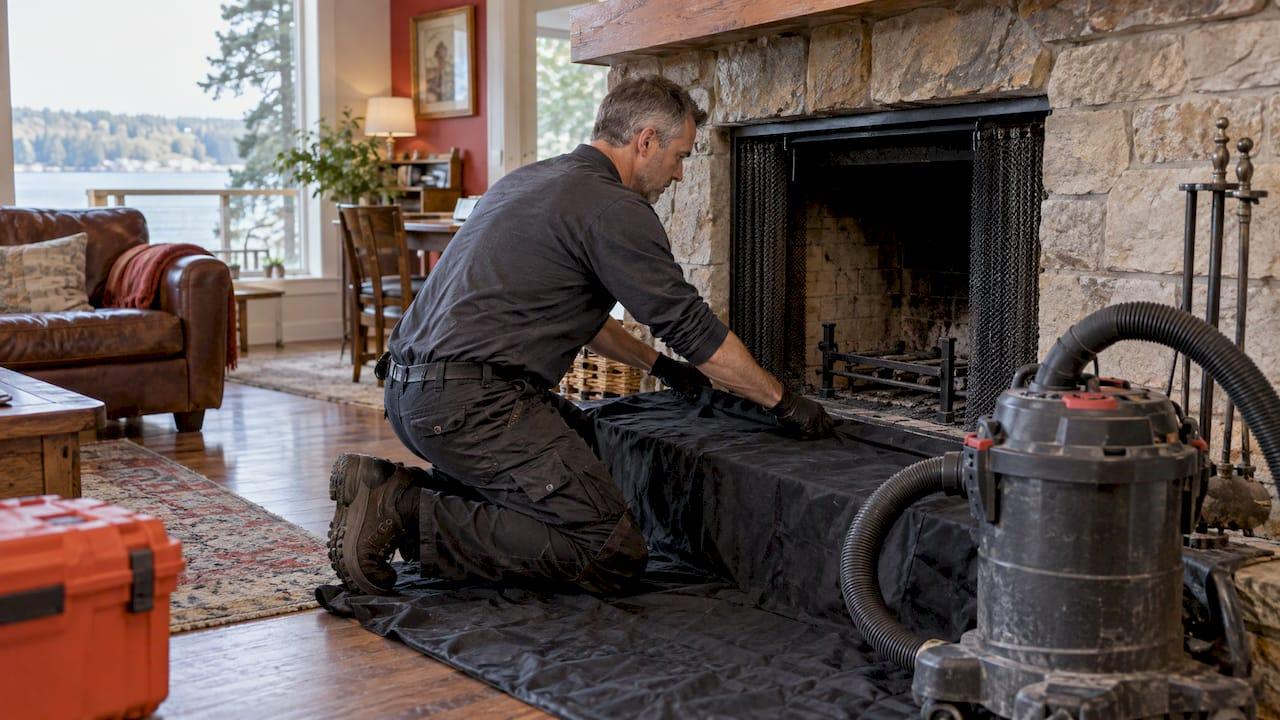
A sweep cleans. The goal is to remove creosote, soot and debris from the flue. Creosote is a flammable deposit left by wood smoke. The PA Guild notes that sweeping removes this flammable material, while an inspection is a separate job that evaluates the chimney's interior and exterior condition and looks for dangerous venting problems.
That difference matters. A clean flue can still have a cracked liner. A sound chimney can still be packed with creosote. A good visit covers both.
On a typical visit, a pro should:
- Look at the fireplace or stove and the flue from the bottom.
- Brush and vacuum the flue, smoke chamber and firebox.
- Check the cap, crown and flashing from the roof.
- Show you what they found, ideally with photos.
- Give you a written list of anything that needs repair.
We cover the work in detail on our chimney sweep service page. If you burn a wood stove, this guide to wood stove chimney cleaning explains when to sweep and what to expect.
Sweep or inspection: which one do you need?
You usually need both. Here is how they differ.
| Sweep | Inspection | |
|---|---|---|
| Main goal | Remove creosote, soot, debris | Find damage and unsafe conditions |
| What it covers | Flue, firebox, smoke chamber | Liner, cap, crown, flashing, damper, masonry, firebox |
| Result | Clean flue | Written findings and repair list |
| When | Per buildup and annual schedule | At least once a year, plus after events and at home purchase |
The Chimney Safety Institute of America, following NFPA 211, says chimneys, fireplaces and vents should be inspected at least once a year for soundness, deposits and correct clearances. Cleaning, maintenance and repairs follow when needed.
The same source says annual inspection still makes sense if you rarely use the fireplace. Animals may nest inside, and the structure can deteriorate with no fire ever lit.
Our chimney inspection service offers Levels 1 to 3. A higher level is for deeper concerns, such as after a chimney fire, a storm, or when a camera look is needed.
How often to sweep a chimney in Gig Harbor
The rule has two parts. Inspect every year. Sweep when buildup calls for it.
CSIA guidance says to sweep a masonry fireplace when soot reaches 1/8 inch, or sooner if any glaze is present. For a factory-built fireplace, sweep when any appreciable buildup occurs. You cannot judge that from the living room. A pro can.
What changes your schedule:
- How much you burn. A fireplace used every weekend builds deposits faster than one lit at the holidays.
- What you burn. Washington State Patrol says to burn only dry, seasoned wood. It also says no treated or painted wood and no paper burning.
- Wood stove or open fireplace. Stoves run in long, slow burns, and these can leave more deposits. See our wood stove cleaning guide.
- Moisture. Damp wood and a leaky crown or cap raise the risk of buildup and masonry damage.
- Time since the last visit. If you do not know when the chimney was last cleaned, treat it as overdue.
Book early. Fall is the busy season, and many homeowners call only after the first cold snap. Our pre-season promotions are built for those who book ahead and invest in safety at a reduced rate.
Warning signs: stop and call
Do not wait for the next annual visit if you see any of these:
- Smoke smell in the house when the fireplace is not in use or burns poorly
- Smoke coming into the room
- Cracks in the chimney or fireplace
- Heavy black or shiny, tar-like deposits
- Animal noises or nesting debris
- Water stains around the chimney or on the ceiling near it
- Rust on the damper or firebox
- Crumbling mortar or bricks, or a chimney that leans
The EPA says cracks can let smoke enter the home or expose chimney components to fire-producing temperatures. If you smell smoke, the EPA's guidance is to shut down the wood-burning appliance, open a window, make sure the flue is open, check the venting system carefully, and call a professional installer or chimney sweep.
Put a carbon monoxide alarm on the same level as the fireplace. Seattle Fire Department guidance says the same, and Washington State Patrol also asks you to keep smoke and carbon monoxide alarms working.
If the problem is structural, our chimney repair page covers rebuilds, relining, caps, crowns and waterproofing. A leaning chimney or a failing smoke chamber needs a pro quickly.
Creosote: why it is the main reason to sweep
Creosote builds as smoke cools in the flue and leaves residue on the walls. It is flammable. That is why the annual sweep exists.
Heavy or glazed deposits are harder to remove than light soot. A basic brushing may not be enough. If your flue has hardened glaze, ask for creosote removal, which is a separate, more intensive job.
You can lower buildup by burning dry, seasoned wood, by keeping the fire hot enough to burn cleanly, and by keeping the cap in good shape so rain stays out. Washington State Patrol also recommends a chimney cap.

Gas fireplaces: do they need a sweep?
Gas units burn cleaner, but they are not maintenance free. Seattle Fire guidance for gas fireplaces calls for an annual technician check. The technician looks at tight, clean connections, a debris-free log insert, and a fireplace free of residue and other buildup from normal burning.
Seattle Fire also says to run a gas fireplace for short periods, never leave it unattended, turn it off when not in use, and keep children and pets at least three feet away behind an appropriate barrier.
If a gas fireplace smells like gas
Treat it as urgent. Turn the unit off and do not use anything that could spark. The Seattle Fuel Code, Appendix D says a gas leak that could cause an unsafe condition means calling the gas supplier to shut off the gas. Work should not continue until repairs are made. The same appendix sets carbon monoxide action levels:
- 70 ppm or higher: evacuate and call 911.
- 30 to 70 ppm: turn off possible sources, open doors and windows, and keep a permanently installed appliance off until it is serviced.
Our guide, what to do when a gas fireplace smells like gas, walks through the first steps.
Pilot light, fan and other faults
A pilot that will not stay lit, a fan that rattles, or a unit that will not start are signs of a fault that needs a technician. See our guides on pilot light repair and fan repair. Our Tacoma gas fireplace repair guide covers signs and next steps for the wider South Sound area.
Common repairs a sweep may find
An inspection can turn up work. The PA Guild lists these common repairs:
- Flue relining
- Crown repair
- Mortar pointing
- Partial rebuilding
- Waterproofing
- Firebox rebuilding
- Damper replacement
- Animal removal or prevention
The PA Guild also names the parts that get checked: flue liner, cap, crown, flashing, damper, masonry, firebox, animal blockage and water infiltration. Safe venting depends on all of them. A strong brick stack with a rusted damper or a cracked crown is still a problem.
In our wet climate, water is the most common root cause we see in masonry. A cracked crown or missing cap lets rain in. Fix it early and it is a small job. Leave it and the damage spreads into the brick and the liner. See our masonry repair work and the chimney repair guide for what to check.
Buying a home or managing property in Gig Harbor
A fireplace can look fine and still fail. If you are buying a home with a fireplace, ask for a chimney inspection by a chimney specialist, not just a glance during the general home inspection.
As a baseline, an InterNACHI Phase I report covers the readily accessible and visible parts of solid-fuel fireplaces and chimneys. It flags damaged or missing lining, excessive creosote, rusted flues, unsafe clearances and improper termination. That is a starting point. If a flag shows up, a deeper inspection is the next step.
Property managers should:
- Keep a dated record of every sweep and inspection per unit
- Ask for photos in each report
- Schedule all units before the heating season
- Tell tenants what to burn and what not to burn
- Fix flagged items before the unit goes back in use
The EPA also warns that installation errors, such as wrong clearances or floor protection, can stay hidden until a fire. If a stove or insert was installed without a pro, have it looked at.
Safe burning habits between visits
Washington State Patrol's fireplace guidance adds simple habits that pair with the annual visit:
- Use a sturdy screen or glass doors.
- Keep children and pets at least three feet from the fire.
- Burn dry, seasoned wood only.
- Do not burn treated or painted wood, or paper.
- Let ashes cool, then store them outdoors in a lidded metal container away from anything that can burn.
How to choose a chimney sweep in Gig Harbor
Search results for this area show a mix of local operators, Tacoma-based companies that travel, and lead-generation sites that sell your request to whoever pays. Know which one you are calling. Here is what to look for.
- Licensed and insured. Ask for proof. Roof work and masonry carry real risk.
- Sweep and inspection in one visit. One without the other leaves gaps.
- Photos. You should see the inside of your flue and any damage.
- A written scope and price before work. No surprises on the day.
- Repair capability. A company that can also reline, rebuild or waterproof saves you a second call.
- Gas fireplace skill. If you have a gas unit, confirm they service them.
- Recent, real reviews. Read what customers say about the specific work.
Cost is a fair question. We do not publish a flat price, because a sweep on a simple fireplace differs from a stove with a long liner or a roof with hard access. Our chimney cleaning cost guide explains what drives the price.
Our perspective
Most chimney problems we see started small. A cracked crown. A loose cap. A season of damp wood. By the time the homeowner calls, it is a bigger job.
We built our work around a simple rule: show, then fix. Every inspection should come with photos, so you see what we see. Every quote should be clear before the work begins.
In Gig Harbor and across the South Sound, water is the quiet enemy. Rain does not need a big opening. It finds the weak spot. That is why we look at the cap, crown, flashing and masonry on every visit, and not only at the flue.
Book the sweep and the inspection together, and book before the season starts. It is the cheapest way to find a problem, and the safest.
Damon
Book your sweep and inspection
Prime Chimney serves homeowners and property managers across the Seattle-Tacoma area, including Gig Harbor. We offer sweeps, Level 1 to 3 inspections, creosote removal, repairs, relining, caps and crowns, masonry restoration, waterproofing, and gas fireplace diagnostics and repairs. Our team is licensed and insured, we document inspections with before-and-after photos, and we aim to give clear pricing up front.

Ready to book? Start with the chimney sweep page or the chimney inspection page, or visit myprimechimney.com to reach us. Ask about pre-season savings.
FAQ
How often should I have my chimney swept?
Have it inspected and cleaned by a professional every year. Washington State Patrol and Seattle Fire both give that advice. Sweeping itself depends on buildup: CSIA says to sweep masonry at 1/8 inch of soot, or sooner if glaze is present.
Do I need a sweep if I rarely use my fireplace?
Yes, you still need an annual inspection. CSIA notes that animals may nest in the chimney and the structure can deteriorate even with little use. The sweep itself may not be needed every year, and the inspection will tell you.
What should I do if I smell smoke or gas near my fireplace?
For smoke, shut down the wood-burning appliance, open a window, make sure the flue is open, and call a chimney sweep. For gas, turn the unit off and call your gas supplier. If a carbon monoxide reading is 70 ppm or higher, evacuate and call 911.
Is a chimney inspection worth it when buying a home?
Yes. A visual check of the firebox does not show the liner, crown or flue deposits. A chimney inspection can flag damaged lining, heavy creosote, rust and unsafe clearances before you close.
Do you service gas fireplaces too?
Yes. We diagnose and repair gas fireplaces, including pilot light, fan and ignition problems. An annual technician check is also what Seattle Fire recommends for gas units.
Sources
- Fireplace Safety, Washington State Patrol
- Homeowner Resources, Chimney Safety Institute of America
- Wood-Burning Installation and Maintenance, US EPA
- Use your fireplace safely, Seattle Fire Line
- Seattle Fuel Code, Appendix D
- Chimney Sweep FAQs, PA Guild
- Phase I Fireplace and Chimney Inspection Report, InterNACHI